
Last updated November 25, 2026
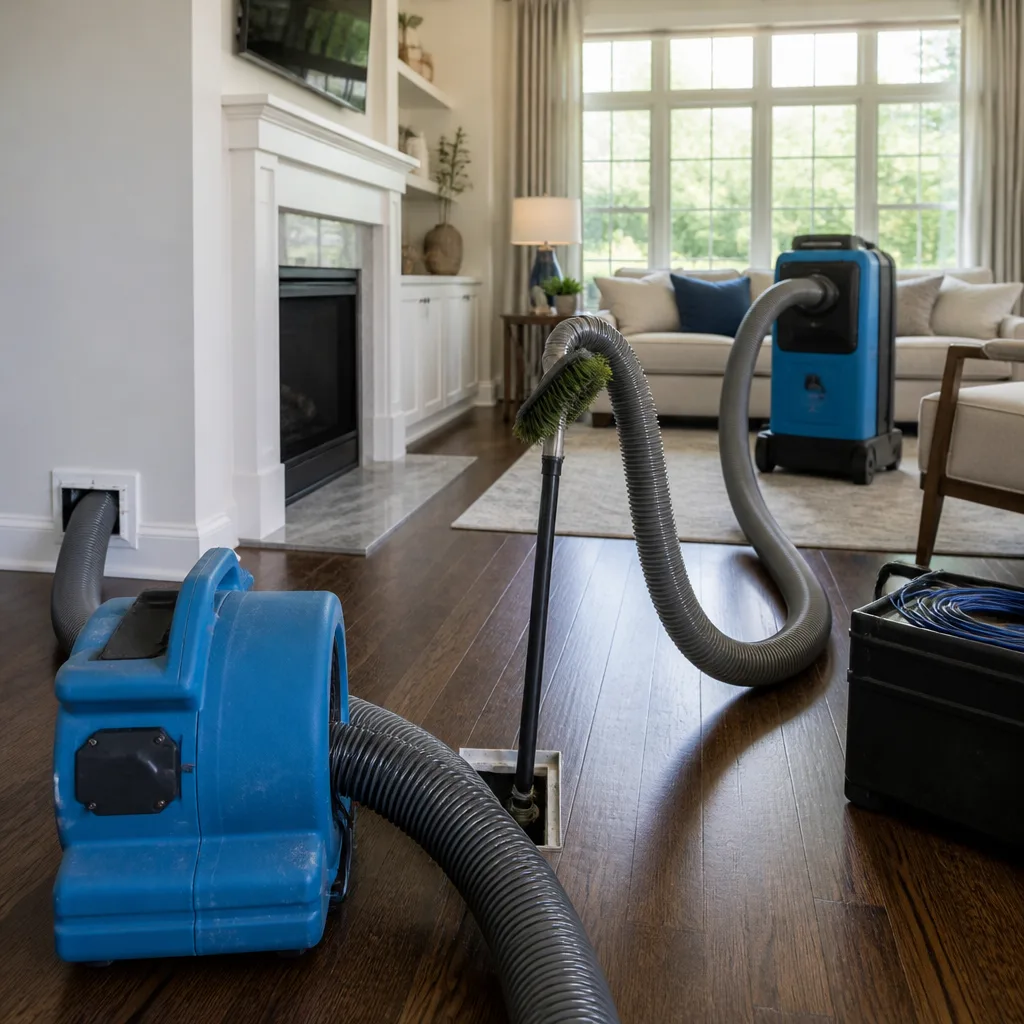 Whole-home duct cleaning
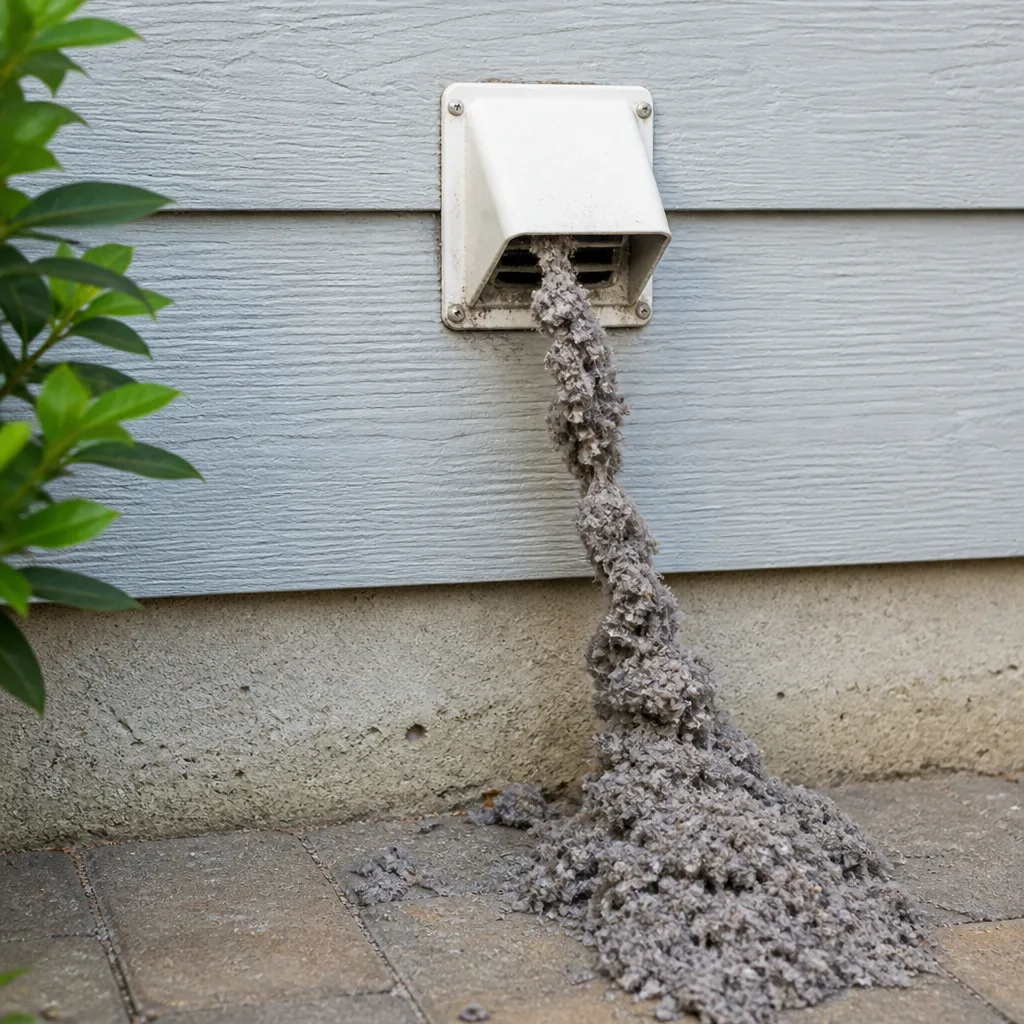 Dryer vent cleaning
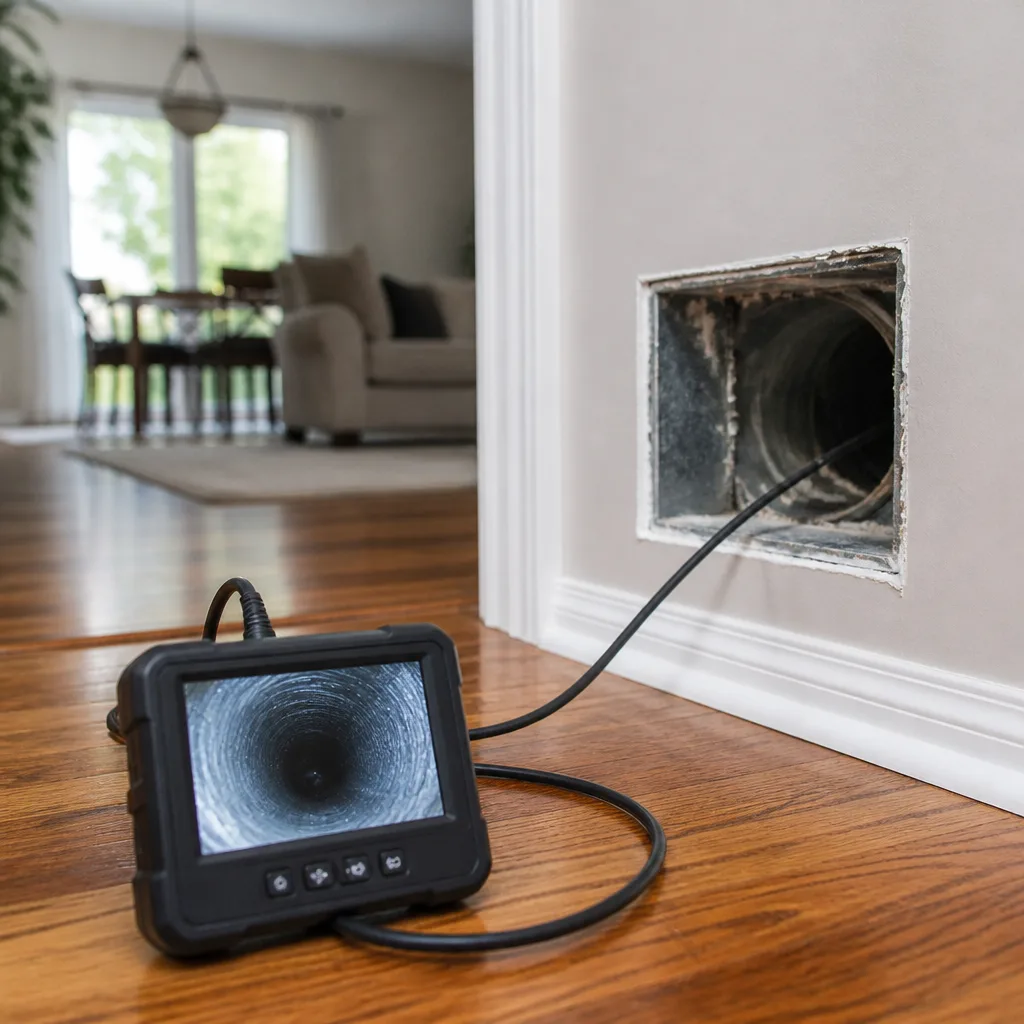 Camera inspection
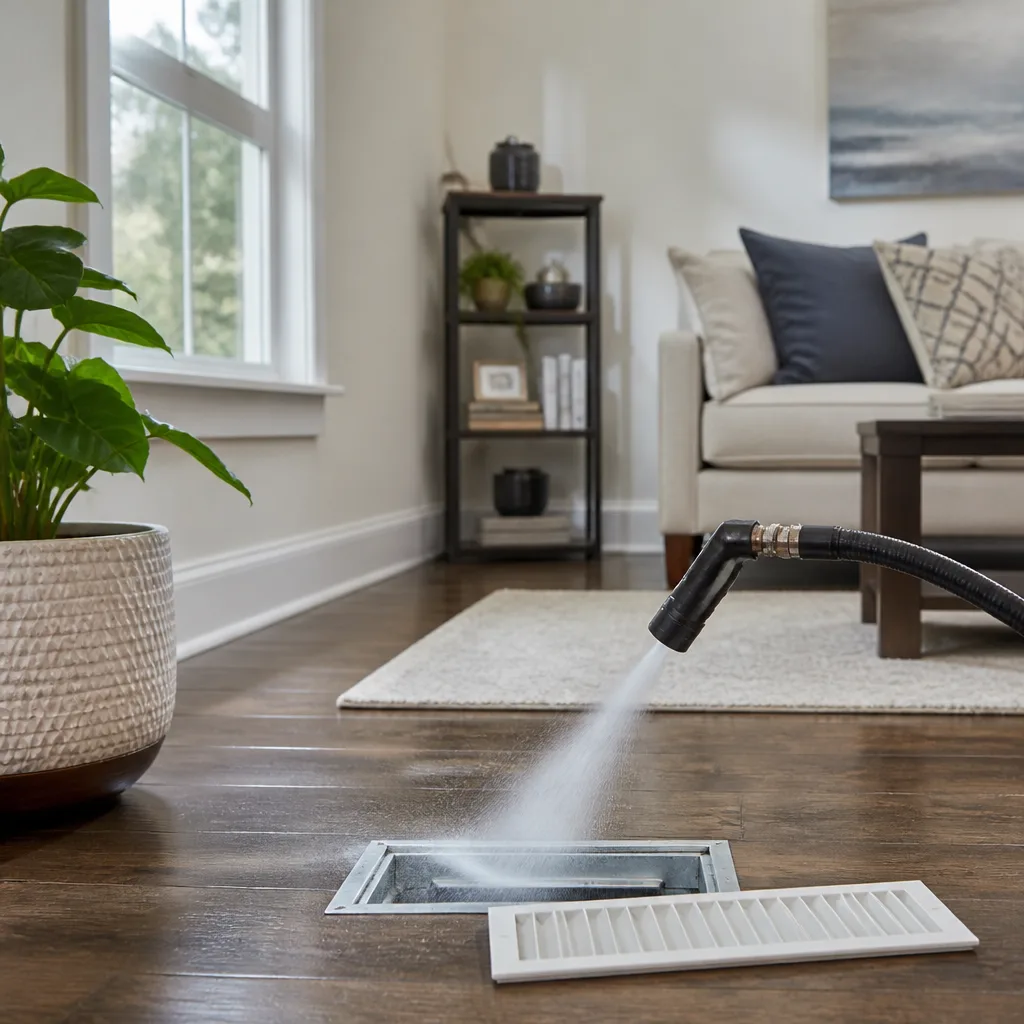 Sanitizing & deodorizing
Whole-system duct and dryer vent check with before-and-after photos - you see exactly what came out of your vents
That "$99 whole-house special" is a bait ad - the real number appears once they are in your hallway, or the "clean" is a shop-vac at the register. We photograph the inside of your ducts before and after instead.
How to Hire an Air Duct Cleaning Contractor in San Clemente: A Step-by-Step Guide
The most common duct cleaning problem in Southern California doesn’t involve fake credentials or a fly-by-night operator. It’s a real crew showing up with equipment that physically cannot do the job, then charging full price for a service that removed almost nothing. Most homeowners never find out. The vacuum runs, the invoice gets paid, and the dust comes back within a season.
This guide is about how to tell the difference before you book. We’ll cover the negative pressure benchmark that separates commercial equipment from consumer gear, the four questions that reveal whether a company cleans the full system or only the supply runs, what a written estimate should itemize line by line, and the review patterns that signal a low-quality job you didn’t know you got. If you live in San Clemente and your allergies, dust, or energy bills have been trending the wrong way, this is the checklist to keep on your phone.
Quick Answer
To hire an air duct cleaning contractor in San Clemente, verify three things before booking: the company uses professional-grade equipment (Rotobrush or Nikro systems, not a shop vacuum), the written estimate itemizes linear footage, register count, air handler cleaning, and sanitization as separate lines, and the crew cleans the full air pathway including the return side and air handler, not just the supply vents. Ask about NADCA membership and whether duct repair and sealing is offered in-house, since gaps and disconnected runs are usually the root cause of the contamination you noticed in the first place. A free estimate from a credentialed contractor will tell you more in ten minutes than a dozen review pages.
Styles & brands we work with
- Whole-home duct cleaning
- Dryer vent cleaning
- Camera inspection
- Sanitizing & deodorizing
Table of Contents
- Why Negative Pressure Is the Only Benchmark That Matters
- Four Questions That Reveal Whether a Company Cleans the Full System
- What a Legitimate Written Estimate Must Itemize
- How to Verify NADCA Membership (And What It Doesn’t Cover)
- Reading Reviews for Duct Cleaning: The Red Flags Homeowners Miss
- The San Clemente Duct Cleaning Market: What You’re Actually Choosing Between
- San Clemente Housing Stock and What It Means for Your Ducts
- Duct Repair and Sealing: The Step That Makes Cleaning Last
Why Negative Pressure Is the Only Benchmark That Matters
Duct cleaning works on a simple principle: you agitate the debris loose, and a vacuum with enough negative pressure captures it before it settles back into the system or drifts into your living room. If the vacuum can’t generate enough suction at the far end of the run, agitation just moves dust around inside the duct. That’s the failure mode nobody warns you about.
The industry benchmark for commercial-grade equipment is a minimum of -0.5 inches of water column of negative pressure measured at the air handler. Consumer-grade vacuums and repurposed shop vacs typically top out well below that, especially once you factor in a 30- to 50-foot run of flexible duct with a couple of elbows. The vacuum may sound powerful in the driveway. At the far register, it’s barely breathing.
This is why professional systems are built around airflow engineering rather than motor size. A Rotobrush system, for example, pairs a rotary brush that physically scrubs the duct wall with a high-volume vacuum that pulls the loosened material toward the collection unit. The brush does the dislodging; the vacuum does the capturing. Neither works alone. A Nikro unit follows the same logic. What you’re paying for when you hire a real contractor is the ability to generate and hold that pressure across the entire system, including the long return runs and the plenum above the air handler where dust accumulates in thick mats.
Here’s the practical version. Ask any contractor you’re considering: “What negative pressure does your equipment hold at the air handler, and how do you verify it?” A real answer involves a number and a measurement method. A vague answer about “strong commercial vacuums” is your cue to keep looking.
- Professional equipment: purpose-built duct cleaning systems (Rotobrush, Nikro) rated to hold pressure across long runs.
- Consumer equipment: shop vacuums adapted with a hose, adequate for a single short register and nothing else.
- What gets skipped with undersized gear: the return side, the plenum, the air handler cabinet, and the last 15 feet of every long run.
- What a thorough job looks like: mechanical agitation plus capture on every branch, with before-and-after photos of your own ducts, not stock images.
We use Rotobrush and Nikro systems on every job in San Clemente because the alternative isn’t a cheaper job; it’s a job that doesn’t happen. You can read more about our process on the air duct cleaning page.
Four Questions That Reveal Whether a Company Cleans the Full System
Most homeowners ask about price first. It’s the wrong opening question, because the price only matters once you know what’s included. Ask these four instead, in this order, before anyone comes out. The answers separate full-system contractors from supply-run-only operators within about five minutes of conversation.
- “Do you clean the return side and the air handler cabinet, or just the supply registers?” A full-system clean covers supply runs, return runs, the air handler cabinet, and the plenum where dust collects in volume. A company that only cleans supply vents is doing roughly half the job and leaving the dirtiest part untouched. If the answer includes the words “we focus on the supply side,” you have your answer.
- “What equipment do you run, and what pressure does it hold?” The answer should name a real professional system (Rotobrush, Nikro, or comparable) and reference negative pressure at the air handler. “We use a very powerful vacuum” is not an answer.
- “Do you offer duct repair and sealing in-house, or do you subcontract it?” Cleaning a duct system that has disconnected joints or torn flex runs is like mopping a floor with the window open. The debris comes right back through the gaps. A contractor who can inspect, seal, and repair during the same visit is solving the actual problem. One who hands you a referral to a separate HVAC company is solving half of it.
- “Will you show me before-and-after photos of my own ducts?” This is the question that separates documentation from theater. Some companies take photos of the equipment before they start and a generic after-shot from a different job. Yours should come from your registers, your air handler, your returns, with the framing to prove it.
If a company answers all four clearly, you’re dealing with a real contractor. If they dodge two or more, the price they quoted no longer means anything. The full spectrum of what we handle, from ducts to dryer vent cleaning, sits under one crew precisely so a repair found mid-clean gets resolved before the technician leaves.
What a Legitimate Written Estimate Must Itemize
A duct cleaning estimate should be a document, not a number. The written estimate is your protection against the single most common complaint in this trade: a low advertised price that becomes a much larger invoice once the technician is standing in your hallway. The way to prevent that is to insist on line items before the work begins.
Here’s what a legitimate estimate for a San Clemente home should itemize:
- Linear footage of ductwork: a rough count of the runs being cleaned, so you can see the scope rather than a flat “whole house” figure.
- Number of registers and returns: supply registers and return grilles counted separately. Any quote that ignores returns is already incomplete.
- Air handler cleaning: listed as its own line, because it’s its own job.
- Coil inspection: a visual check of the evaporator coil for dust buildup. Cleaning a coil isn’t always part of standard duct cleaning; the inspection should be.
- Sanitization as a separate line item: optional and priced on its own, never bundled into a “package” so you can’t see what you’re paying for it.
- One flat price for the system, agreed before work starts: not per-vent pricing, not a discount coupon that changes once the van is in the driveway.
Some homes also need treatment beyond a routine clean. If the crew finds microbial growth or heavy particulate near the air handler, that’s an elevated contamination situation, and it’s the reason we keep Abatement Technologies equipment on hand for contaminant-capture work. It’s also a line item the estimate should reflect. Here’s a typical breakdown of what to expect in the San Clemente market, based on system size and scope:
- Routine full-system duct cleaning, standard home: typical range falls in the low-to-mid hundreds, quoted as one flat price for the system.
- Larger homes or multiple-zone systems: higher, based on linear footage and register count, not per vent.
- Sanitizing treatment: a separate line, priced on its own.
- Duct repair and sealing: quoted after inspection, since the scope depends on what’s actually disconnected or torn.
- Dryer vent cleaning: a separate service with its own estimate.
The written estimate sets the final price. Anything not on it doesn’t get added after the fact without your approval, and that’s the standard every homeowner in San Clemente should expect. Estimates are free, and you can call (866) 371-4884 to set one up.
How to Verify NADCA Membership (And What It Doesn’t Cover)
NADCA, the National Air Duct Cleaners Association, publishes a standard of care for the trade and offers a certified professional designation. Membership signals that a contractor has agreed to follow accepted industry practice, including the Assessment, Cleaning, and Restoration standard, and it’s a reasonable filter to apply. Here’s what to actually do with that information.
- Ask directly whether the company is a NADCA member. The answer should be a clear yes or no. You’d be surprised how many operators are vague about it.
- Verify the name on the NADCA member directory. If the company says yes, confirm it. Membership is public information.
- Ask which technician will actually be on the job and whether they’re trained on the equipment being used. Membership is held by the company, but the quality of the clean depends on the crew.
- Ask whether the company is also an HVAC contractor or works alongside one. Duct cleaning often uncovers disconnected runs, crushed flex, and leaking plenums. NADCA membership doesn’t obligate the contractor to fix any of those. That’s a separate capability, and you should ask about it directly.
What NADCA membership doesn’t cover is just as important to know. It doesn’t certify that a specific technician on a specific day will do thorough work. It doesn’t guarantee the equipment used on your job is commercial-grade. And it doesn’t obligate the contractor to inspect and repair the system beyond cleaning it. Those are things you verify by asking about equipment, process, and repair capability, exactly as we covered above. Here’s what NADCA membership is good for: a baseline commitment to industry-accepted cleaning methods, a public record you can check, and a reason to trust the contractor is treating the trade seriously. What it isn’t is a substitute for the four questions or the line-item estimate.
Property managers often tell us they use NADCA as their first screen when vetting contractors for a turnover clean. It’s a reasonable start. The verification step after that is equipment and scope, and that’s where the real differences show up.
Reading Reviews for Duct Cleaning: The Red Flags Homeowners Miss
Reviews are where the trade’s failures get recorded, usually without the reviewer knowing exactly what went wrong. Someone writes “the technician was nice and on time” and rates five stars, and six weeks later the dust comes back. They never connect the two. Read for specifics, not sentiments. Here are the patterns worth flagging.
- Reviews praising personality without mentioning equipment or process: “Friendly crew!” “Easy to schedule!” These tell you nothing about whether the job was done. Look for reviews that name the equipment, describe the process, or mention before-and-after photos.
- Reviews about price changing on-site: a low advertised price that “became a bigger invoice once they saw the system.” This is the classic bait-and-switch, and it shows up in reviews far more often than in ads.
- Reviews where the technician only cleaned the supply vents: the reviewer sometimes mentions “they never opened the returns” or “they skipped the air handler” as a minor note. It isn’t minor. That’s half the job.
- Reviews that mention a “sanitizing fog” as the main event: if the visit was mostly a spray treatment with minimal physical duct work, the equipment didn’t have the muscle for a real clean.
- Reviews complaining that dust came back within a month: often dismissed by the company as “just dust from outside,” but usually a sign that the negative pressure was insufficient to capture debris in the first place.
- Reviews with a photo of a clean vent grille and nothing else: a clean grille proves grilles get wiped. It says nothing about what’s inside the duct behind it.
- Repeated wording across multiple reviews: not always fake, but sometimes the sign of a template request sent to customers after a quick job.
The most useful reviews for a homeowner researching a duct cleaning contractor in San Clemente are the ones that mention a specific process detail, a before-and-after photo, or the contractor’s willingness to repair something found during the clean. Those are the reviews that describe real work. If you want to see what our own process looks like from start to finish, the San Clemente Air Duct Cleaning Pros overview covers the five services we handle in one visit.
The San Clemente Duct Cleaning Market: What You’re Actually Choosing Between
San Clemente has a crowded duct cleaning market, and the pricing reflects that. Door-to-door operators, franchise vans, independent HVAC shops adding duct cleaning as a side service, and purpose-built duct specialists all compete here. The differences between them matter far more than the quoted prices, which tend to cluster in a similar range until you see what’s included.
The low end of the market is dominated by operators running residential shop vacuums with a long hose attached. Their quotes look attractive because the equipment cost them a few hundred dollars and the labor is quick. The job they perform reflects that. The high end is dominated by HVAC companies who focus on equipment installation and swap, with duct cleaning offered as a bolt-on. Their cleaning is usually competent but their attention is elsewhere.
What’s scarce in San Clemente is the middle ground: contractors whose core business is the air pathway itself, who use purpose-built equipment and can also repair and seal a leaking system, who stock the indoor air quality products that resolve the underlying issue. That’s the category worth looking for.
- Door-to-door and phone-canvass operators: usually the first to offer a coupon price. Verify equipment and scope before booking.
- General HVAC shops: competent on equipment but often narrow on duct cleaning. Ask specifically what equipment they use.
- Purpose-built duct specialists: the category to prioritize. Ask about Rotobrush or Nikro specifically.
- Full-pathway contractors: the rare category that handles ducts, dryer vents, and HVAC cleaning, plus repair and sanitizing, with one crew. This is the one that solves the problem once instead of returning to it.
One more local note for San Clemente homeowners: the climate here is dry for most of the year, and interior dust loads reflect that. Fine particulate settles into return systems during the dry season, and the first time the system runs hard it redistributes into living spaces. A full-system clean scheduled before that turnover, with a documented before-and-after, does more for indoor air quality than any single filter upgrade. And when the cleaning reveals that the filter housing is undersized or the return filtration is thin, that’s where Honeywell and Aprilaire products come into play. We’re authorized to work with both, which means we can recommend and install the right filtration upgrade during the same visit rather than scheduling a second trip.
San Clemente Housing Stock and What It Means for Your Ducts
San Clemente’s housing mix creates predictable duct problem patterns. Older homes in established neighborhoods, newer construction on the inland edges, and multi-unit buildings closer to the center all pose different challenges. Knowing which category your home falls into helps you ask better questions and anticipate what the estimate will look like.
Older homes often have original sheet metal ductwork with taped or mastic-sealed joints that have aged out. Those joints leak. Disconnected runs are common, especially where the system was ever retrofitted or where a room was added. The visible symptom is uneven airflow, higher energy bills, and dust settling in specific rooms. What an older San Clemente home usually needs is a full-system clean followed by duct repair and sealing, in that order, because cleaning a leaking system only buys you a season.
Newer construction tends to use flexible duct, which is easier to route but more prone to compression and tearing. Flex runs that got pinched during installation or kinked over time have restricted airflow, and restricted airflow means debris settles and accumulates. If your newer home has one or two rooms that never feel right, a camera inspection during the clean will usually explain why. Cleaning alone won’t fix a crushed run. Sealing or re-running does.
Multi-unit buildings bring a different problem: shared or stacked systems where one unit’s dust load can travel. Property managers refreshing units between tenants need a documented clean for each system, not a spot-check. That’s one reason we keep HVAC cleaning alongside duct cleaning for the same project, so a full turnover gets handled in one coordinated visit instead of three separate contractors on three separate days.
Whatever the housing type, the sequence matters. Inspect first. Clean second. Repair and seal third. Sanitize last, and only if the inspection called for it. A contractor who inverts that order is either skipping a step or upselling one.
Duct Repair and Sealing: The Step That Makes Cleaning Last
Cleaning a duct system without addressing leaks is a temporary fix. The dust comes back because the gaps in the system are pulling it in. Duct repair and sealing is the step that turns a cleaning into a lasting solution, and it’s the service most duct cleaners simply don’t offer.
Here’s what a typical repair-and-seal scope covers after a full inspection:
- Locate leaks and disconnections. Visual inspection at accessible joints, plus a pressure check on the system to identify where static pressure is being lost.
- Reconnect and secure any disconnected runs. Flex duct that slipped off a collar, sheet metal joints that separated, or plenum connections that were never properly fastened.
- Seal accessible joints with mastic or approved tape. Not duct tape. Proper sealing material rated for the application.
- Re-check the system pressure. Sealing changes the pressure profile, and the system should be verified to work the way it’s supposed to once the leaks are addressed.
- Document the repair. Photos of the sealed joints, the reconnected runs, and the pressure readings afterward. Same documentation standard as the clean itself.
We frame repair and sealing as the completion of a clean, not an upsell. If the inspection during a standard cleaning reveals leaks, the right thing is to offer to fix them while the technician is already there, not schedule a return visit and bill a second trip. When sanitizing is part of the scope, Guardsman-grade protective treatments are available to extend the effect of the clean across the system. The reasoning is simple: clean air starts at the source, and the source is a sealed, unobstructed air pathway. One visit, full system is how we approach every San Clemente job, because that’s what actually resolves the dust, the musty smell, and the energy bills that brought the homeowner to the phone in the first place.
Common Mistakes to Avoid
- Hiring on price alone. The lowest bid usually reflects the smallest equipment. Ask what they’ll use before you compare what they charge.
- Assuming “whole house clean” means the whole system. Confirm in writing that the estimate covers supply runs, returns, and the air handler. Many quotes skip the returns entirely, which is where the heaviest dust accumulates.
- Agreeing to a fog or sanitizing treatment as the primary service. A fog machine and a canister isn’t duct cleaning. Sanitizing is a separate line on the estimate, priced on its own, and it’s the last step, not the only one.
- Booking a company that doesn’t offer repair and sealing. If the inspection turns up disconnected runs and the contractor can’t fix them, you’ve paid for a clean that won’t last past the next dry season.
- Not asking for before-and-after photos of your own ducts. Stock photos prove the company has a camera. Your own photos prove the work happened.
- Skipping the return side because it looks clean. Return grilles collect less visible dust than supply registers because they’re not blowing air out, but the return runs and plenum behind the air handler are usually where the heaviest buildup lives.
- Accepting a quote that changes on-site without a written update. A legitimate contractor inspects, updates the estimate, gets your approval, and then does the work. If the price moves, the paperwork moves with it.
See the difference
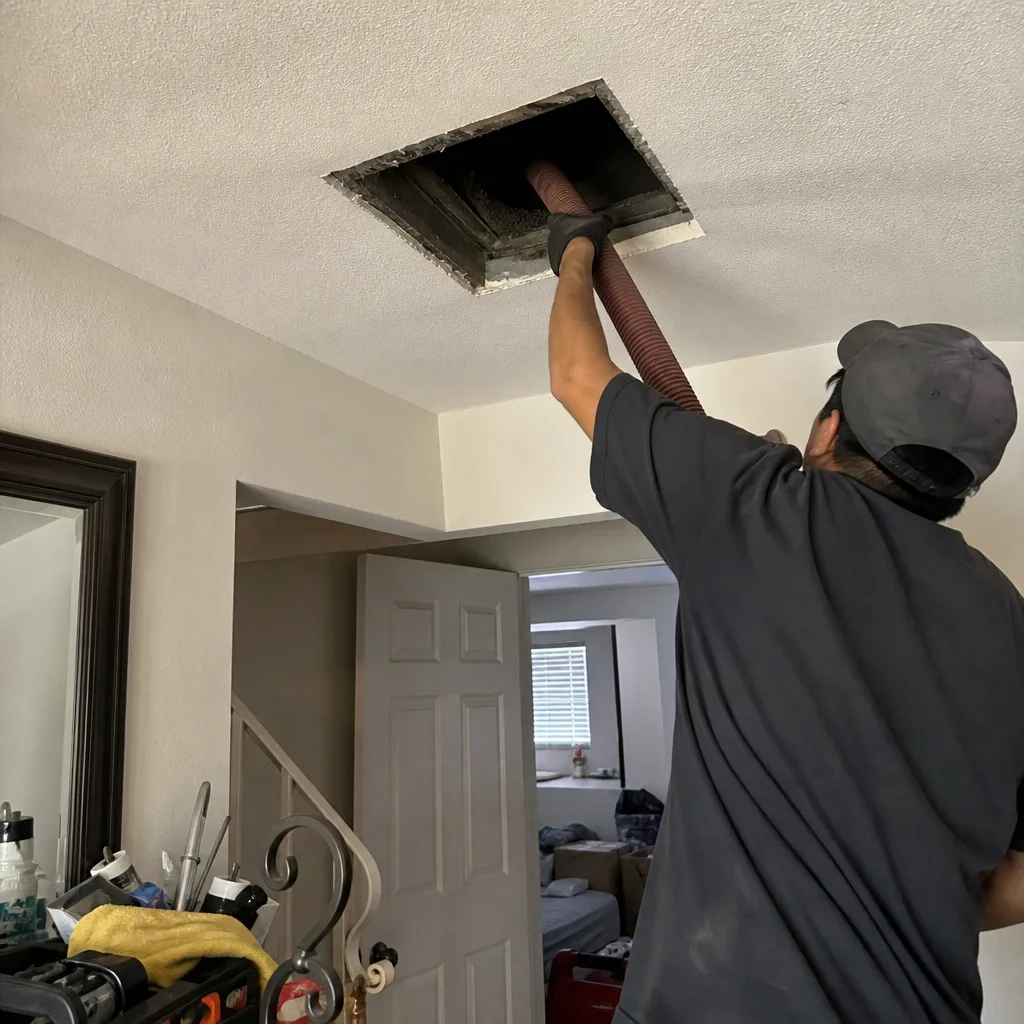 Before
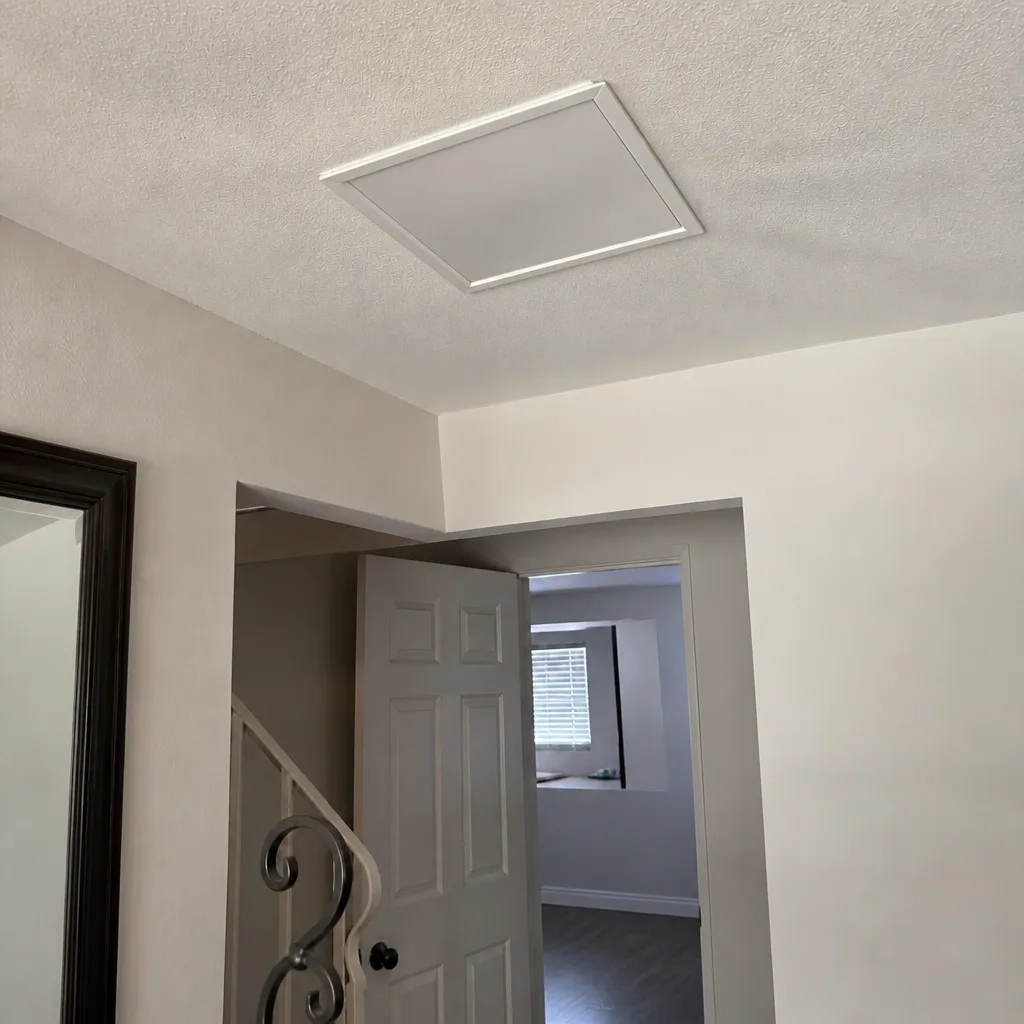 After
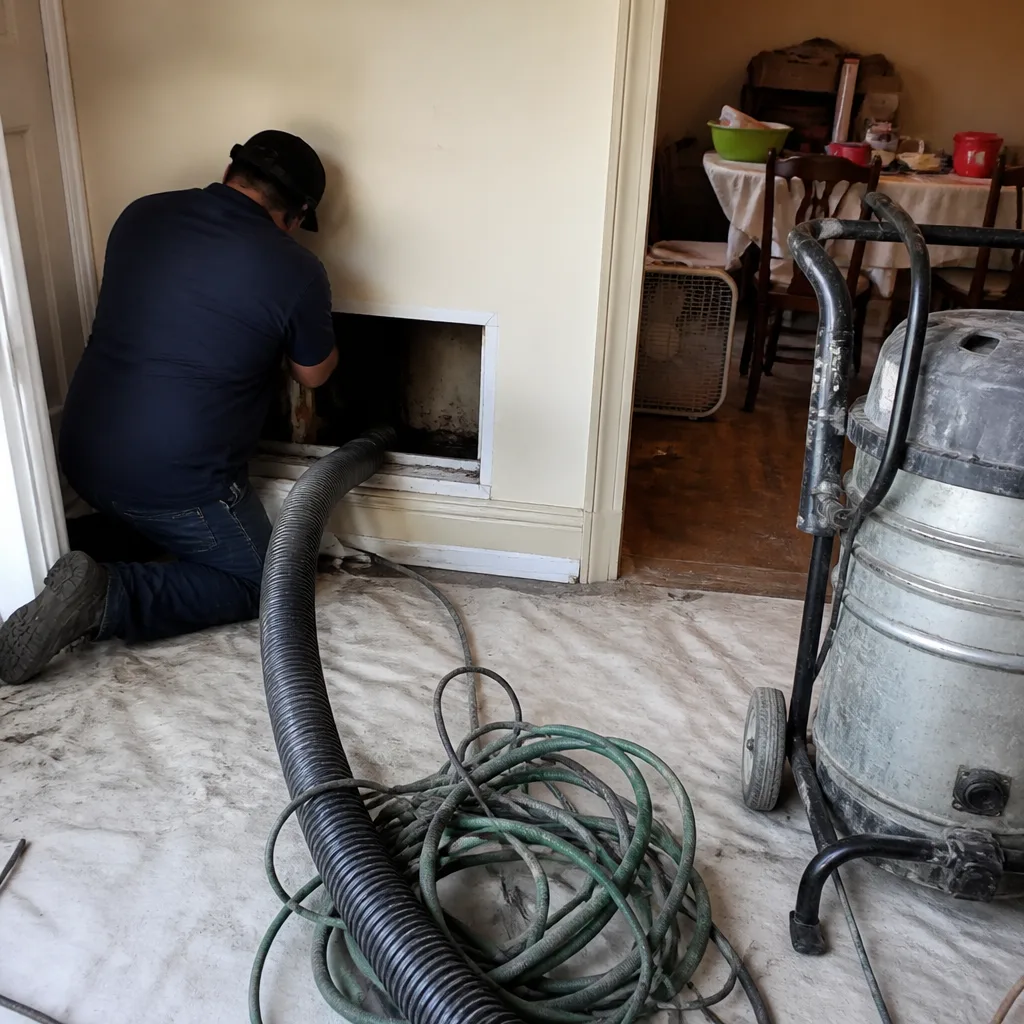 Before
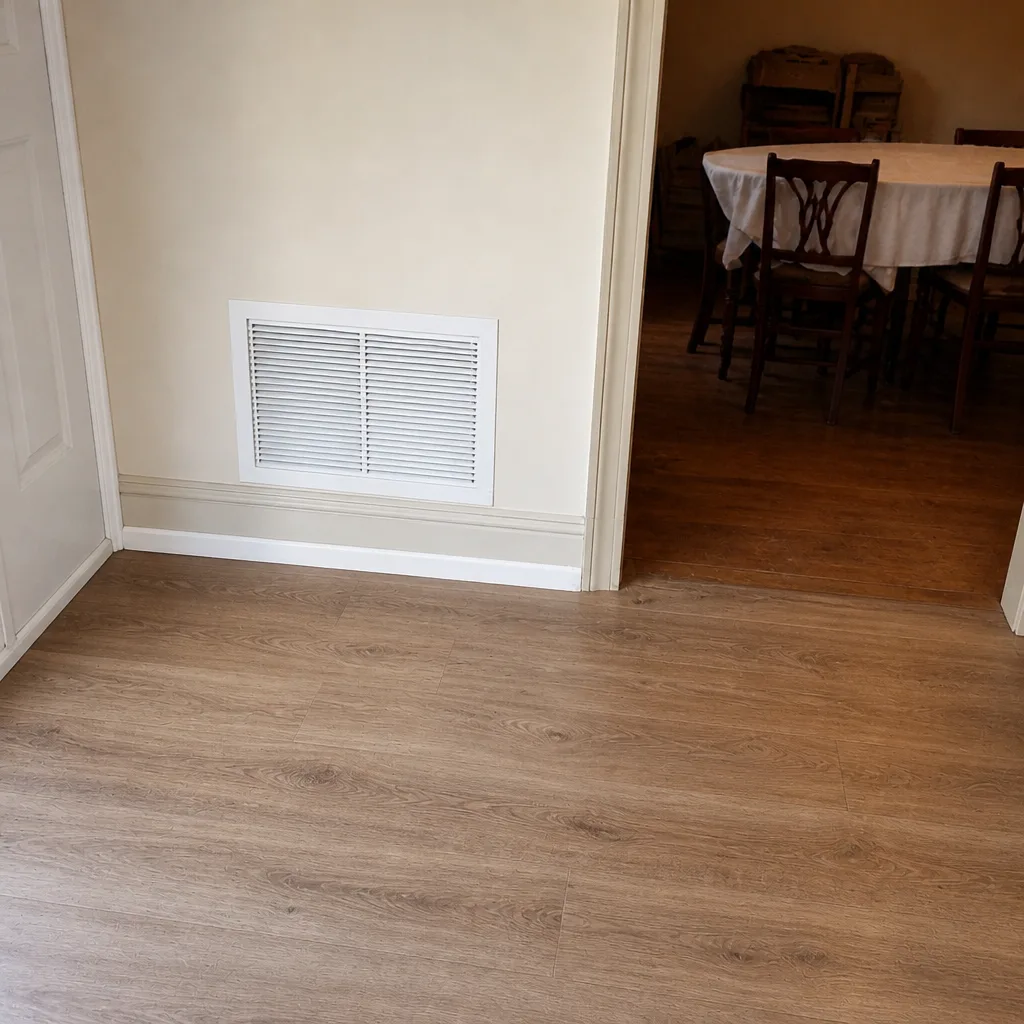 After
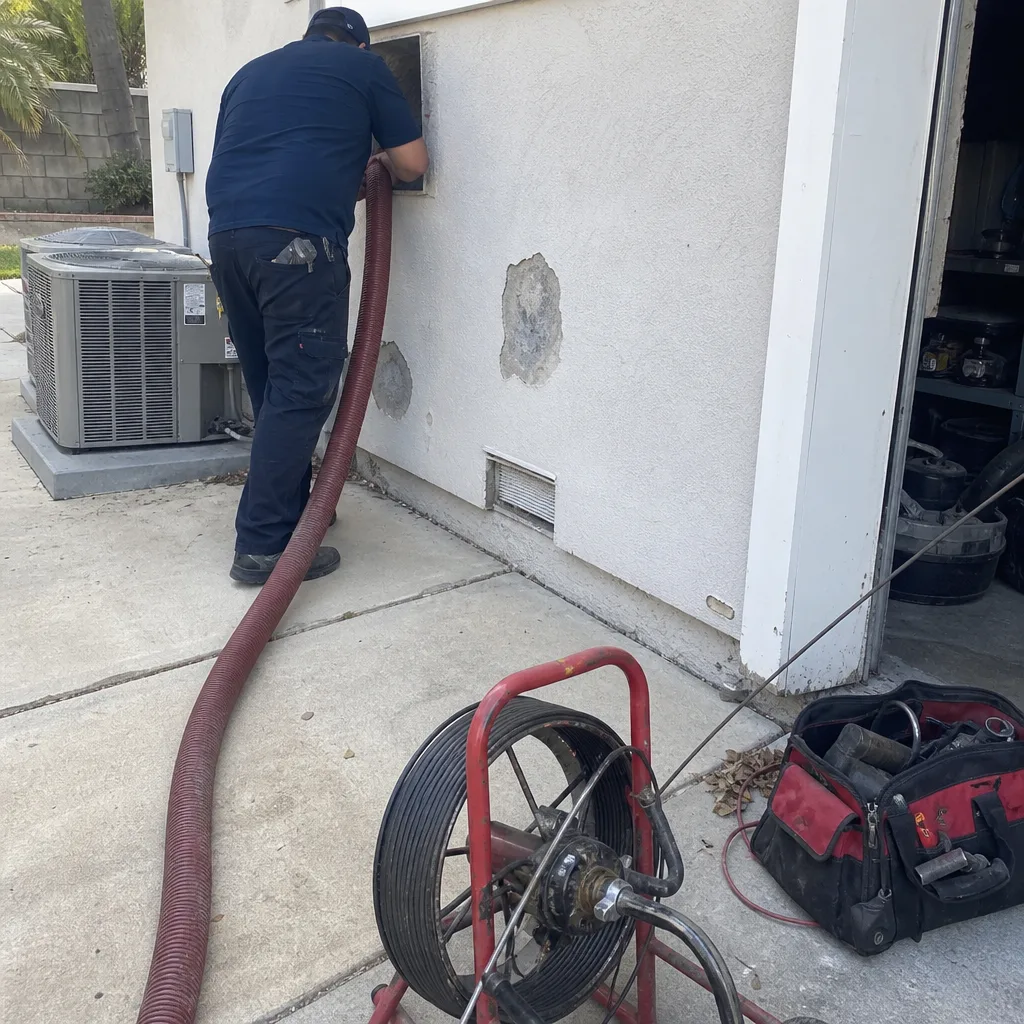 Before
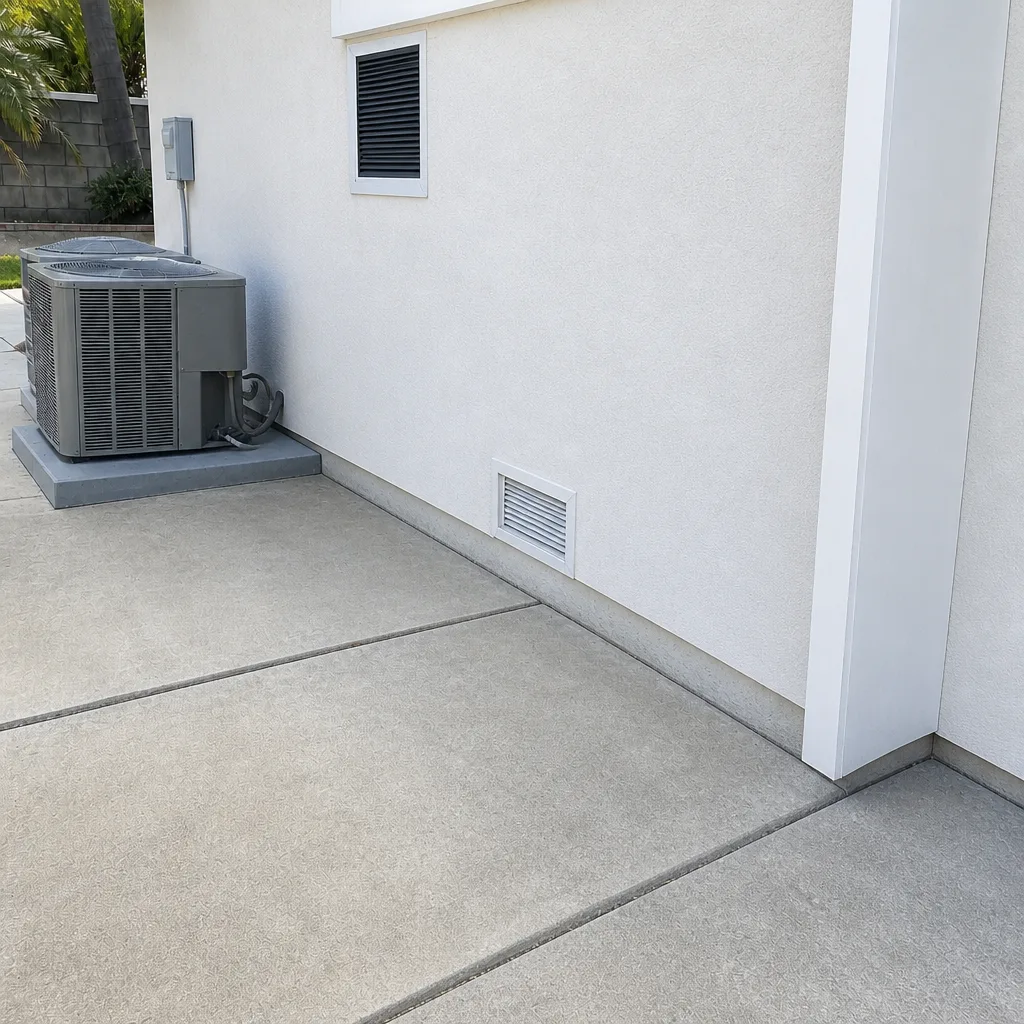 After
When to Call a Professional
Routine duct cleaning isn’t urgent, but there are signals that mean you should stop waiting. Worsening allergies or asthma symptoms that flare when the HVAC kicks on. Visible dust settling within a day of cleaning surfaces. A musty or earthy smell from the vents that doesn’t clear. Energy bills climbing without a change in usage. Visible debris around a register, or a register that’s pulling noticeably less air than its neighbors. Any of those means the duct system itself is the problem, and the fix starts with an inspection. If you’re in San Clemente and any of this sounds familiar, San Clemente Air Duct Cleaning Pros offers free estimates in San Clemente, call (866) 371-4884. Our technicians have up to 10 years of experience, we answer 24/7, and we schedule fast dispatch from 7am to 7pm, Sunday through Friday.
Frequently Asked Questions
Air duct cleaning in San Clemente typically runs in the low-to-mid hundreds for a standard home, quoted as one flat price for the system rather than per vent. Larger homes and multi-zone systems run higher based on linear footage and register count, and sanitizing or repair work is priced as separate lines after inspection. The written estimate sets the final price, and estimates are free. Call (866) 371-4884 for an exact quote, estimates are free.
Cheaper quotes usually reflect smaller equipment. A company using a shop vacuum with an adapted hose can’t generate the negative pressure needed to dislodge and capture debris across a full duct run, so the job costs them less to perform and less to sell. A quote that looks dramatically lower is usually a quote for cleaning the supply side only, or for a fog treatment rather than a mechanical clean. Ask about equipment and scope before comparing prices, and call (866) 371-4884 if you’d like a straight comparison.
Before-and-after photos of your own ducts, your own registers, and your own air handler. Not stock images and not photos taken before the equipment goes in, but documentation of what came out of the system you live in. Ask for the photos when you book, and expect them after the job. Call (866) 371-4884 to schedule a free estimate with documented before-and-after service.
No, but it’s a reasonable first screen. NADCA membership signals a commitment to accepted industry methods and a public record you can verify. What it doesn’t cover is the equipment on your specific job or the contractor’s ability to inspect and repair the system after cleaning. Pair the membership check with the four questions above and the line-item estimate, and you’ll have a much clearer picture. Call (866) 371-4884 if you want to walk through the questions with a technician.
Most homes in San Clemente benefit from a full-system cleaning every few years, with the timing driven by what’s actually in the system rather than a calendar. Homes with pets, recent renovation dust, or visible dust buildup at the registers usually need it sooner. Homes that have been cleaned recently and sealed properly can stretch it longer. A free inspection tells you what your specific system needs. Call (866) 371-4884 to book one.
Yes, that’s the point of having both services under one crew. If the inspection during a routine clean turns up disconnected runs, torn flex, or leaking joints, we can repair and seal them before we leave. Cleaning without sealing is a short-term fix, and we’d rather complete the job the right way the first time. Call (866) 371-4884 to schedule an estimate that covers both.
The Bottom Line
Hiring a duct cleaning contractor in San Clemente comes down to verifying three things: real equipment with real negative pressure, a written estimate that itemizes scope line by line, and a company capable of repairing what the inspection finds. The cheapest quote in the market usually reflects inadequate equipment, which means you’re paying for a job that moves dust around rather than removing it. The most expensive quote often reflects a company that subcontracts the parts it can’t handle. Aim for the contractor in the middle: purpose-built equipment, documented work, and the ability to complete the whole job in one visit. Call (866) 371-4884 for a free estimate. We answer 24/7, with fast dispatch from 7am to 7pm, Sunday through Friday. One flat price per system agreed before work starts, before-and-after photos of your own ducts, and a satisfaction guarantee.
Written by the team at San Clemente Air Duct Cleaning Pros.