
Last updated November 25, 2026
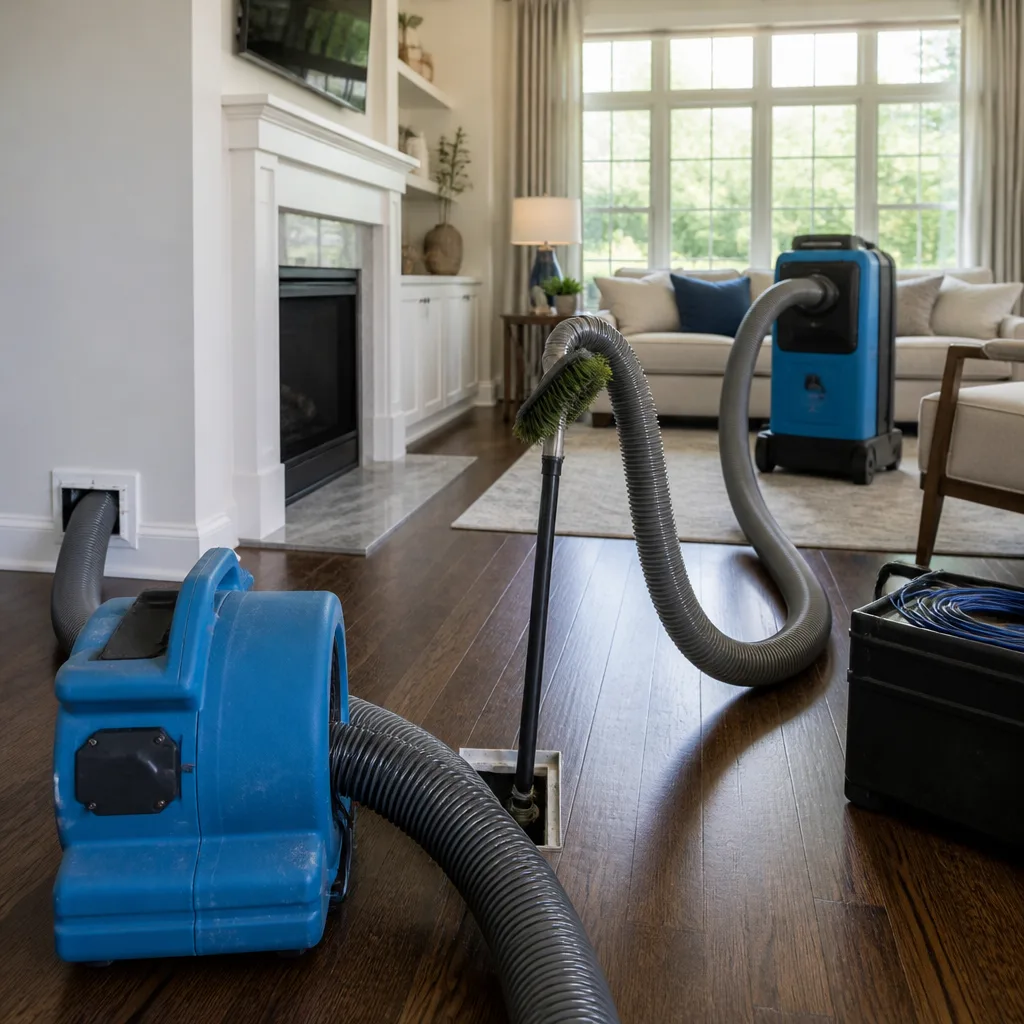 Whole-home duct cleaning
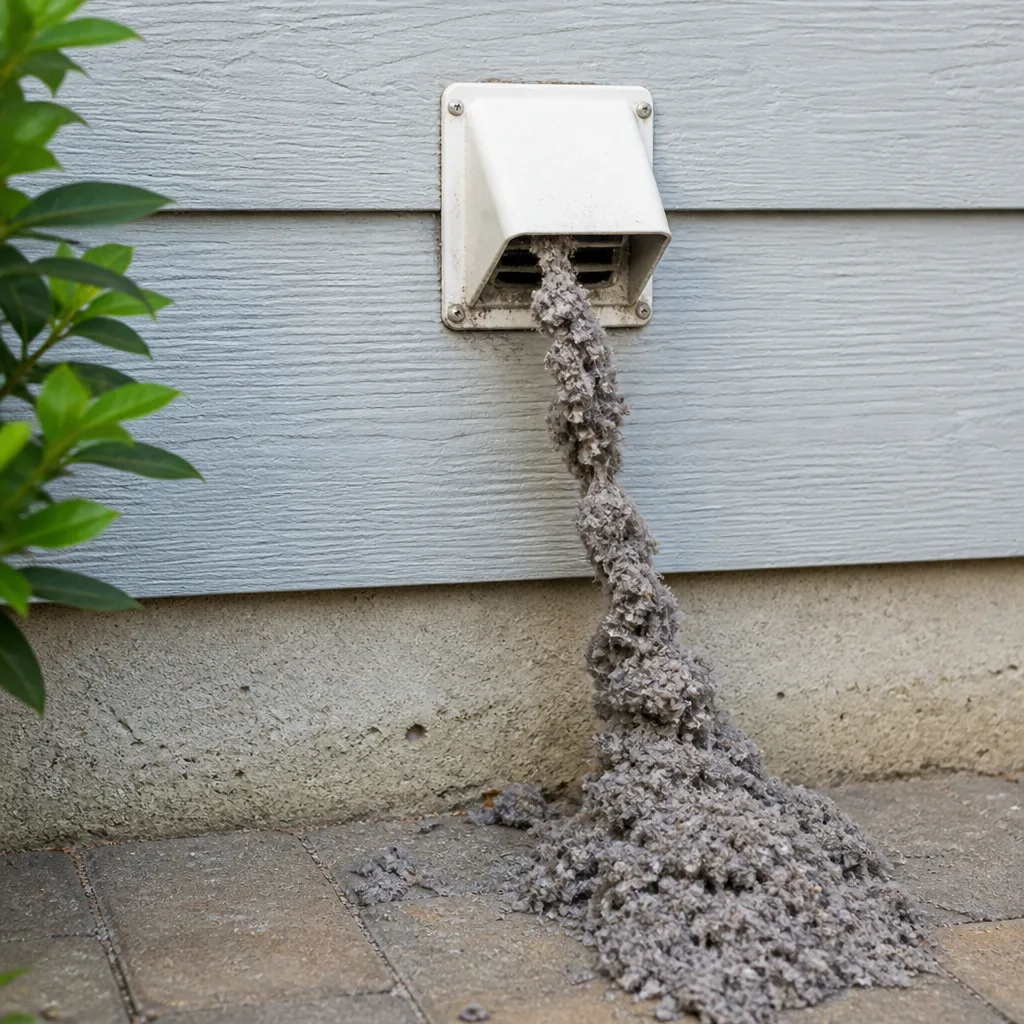 Dryer vent cleaning
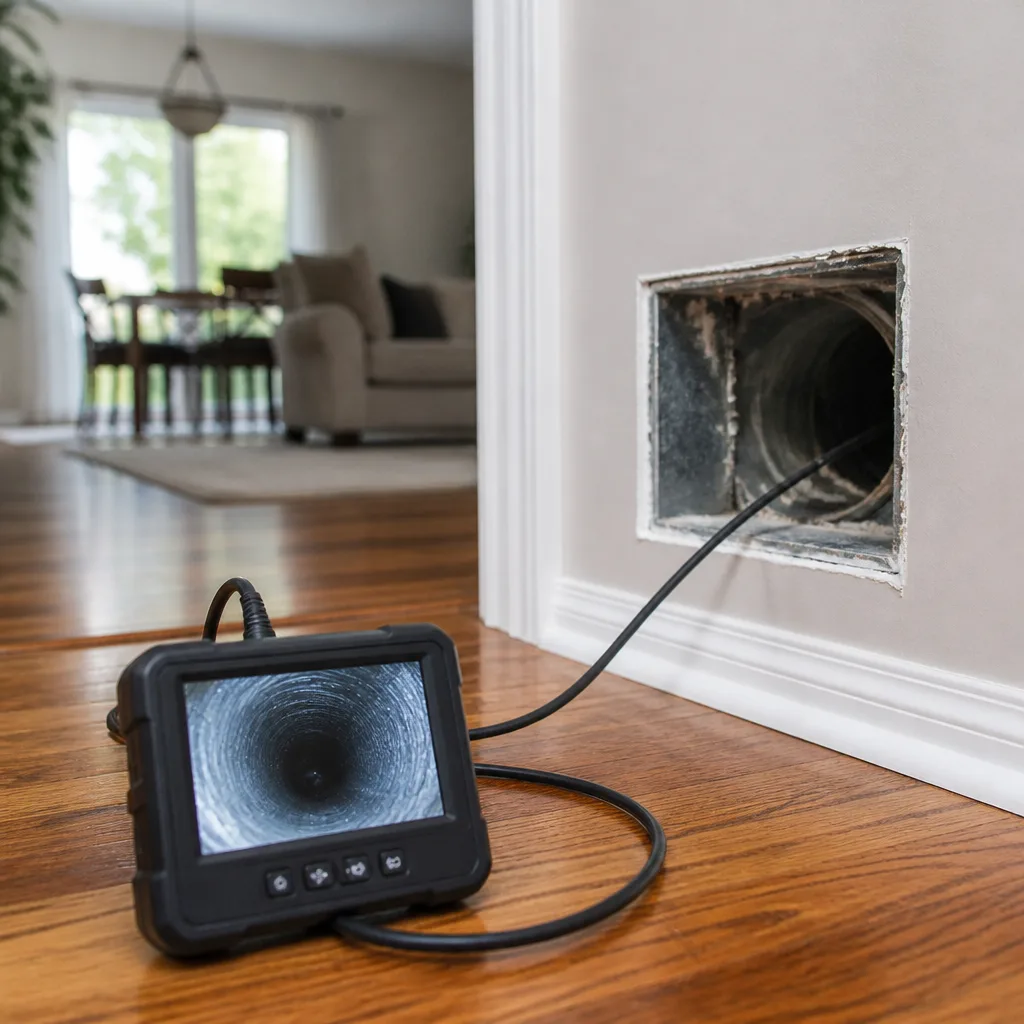 Camera inspection
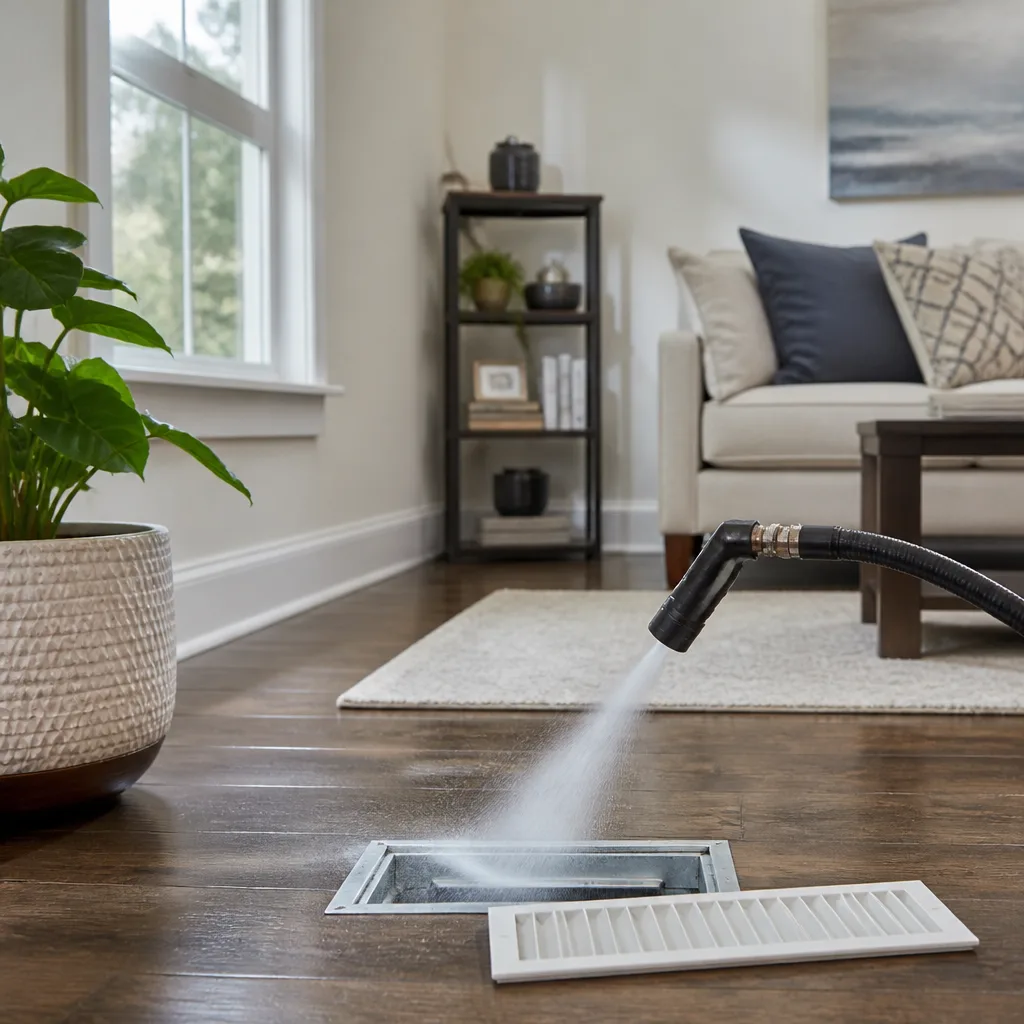 Sanitizing & deodorizing
Whole-system duct and dryer vent check with before-and-after photos - you see exactly what came out of your vents
That "$99 whole-house special" is a bait ad - the real number appears once they are in your hallway, or the "clean" is a shop-vac at the register. We photograph the inside of your ducts before and after instead.
Air Duct Cleaning Permits, Codes & Inspections in San Clemente, CA: What You Need to Know
The part of duct work that trips people up is rarely the cleaning itself. Cleaning is maintenance, and maintenance doesn’t need a permit. The permit question shows up the moment the job moves from removing what’s in the ducts to changing the ducts: replacing a run of flex duct, repairing a plenum, cutting in a new return, or installing a UV purifier inside the air handler. That work falls under California’s mechanical code, and in San Clemente it runs through the city’s building department. This guide draws the line clearly so you know what needs a permit, what needs inspection, what your contractor must disclose, and how to check the finished work before you sign off.
Quick Answer
Routine air duct cleaning in San Clemente does not require a permit. Duct repair, sealing, and modification do fall under the California Mechanical Code (Section 601 covers duct systems and their installation) and generally need a mechanical permit issued through the City of San Clemente’s building department. Any installation that adds a component to a pressurized air pathway, such as a UV purifier or electrostatic filter inside the air handler, is a modification and should be permitted, inspected, and documented for warranty purposes.
Styles & brands we work with
- Whole-home duct cleaning
- Dryer vent cleaning
- Camera inspection
- Sanitizing & deodorizing
Table of Contents
- Cleaning vs. Repair: Where the Permit Line Actually Sits
- Flex Duct Replacement and Title 24 Duct Leakage Testing
- Orange County vs. City of San Clemente: Who Issues Your Permit?
- What Contractors Must Disclose About Sanitizers and Chemicals
- Checking Post-Cleaning Add-Ons Before You Sign Off
- What a Mechanical Inspection Actually Looks At
- How to Verify Permits and Contractor Competence
- Why San Clemente Homes Run Their Systems Year-Round
Cleaning vs. Repair: Where the Permit Line Actually Sits
Here’s the distinction most homeowners never hear explained: a duct cleaning removes debris from a system that stays exactly as built, so no permit is triggered. A duct repair alters the system, and alteration is what the mechanical code regulates. California Mechanical Code Section 601 addresses duct systems directly: materials, installation, and connections. When a contractor cuts out a crushed flex run and installs a new one, or rebuilds a failed plenum connection, that is installation work under Section 601.
In our experience across San Clemente, the confusion usually comes from how the work gets sold. A cleaning estimate turns into “while we’re in here, this run is torn and should be replaced,” and the homeowner assumes the whole visit is still maintenance. Sometimes it is. Sometimes it isn’t.
Broadly, here’s how the two categories separate:
- No permit typically required: mechanical cleaning of existing ducts, negative-pressure vacuuming, register and grille cleaning, brush and air-whip agitation of existing runs, dryer vent cleaning of an existing vent, and HVAC coil and blower cleaning that doesn’t alter the air pathway.
- Mechanical permit generally required: replacing flex duct or rigid duct runs, repairing or replacing a plenum, adding or relocating a supply or return, installing an inline booster fan or UV purifier inside the air handler, applying aerosol sealant to the duct system, and any change to the duct layout or sizing.
Your air duct cleaning visit can legitimately be a permit-free job. The moment it becomes a duct repair job, the permit conversation should happen before anyone picks up a tool. If a contractor tells you a flex duct replacement never needs a permit, ask them to point to the code section they’re relying on. A straight answer is a good sign; a wave of the hand is not.
Flex Duct Replacement and Title 24 Duct Leakage Testing
California’s Title 24 energy standards set duct leakage limits for duct systems in conditioned spaces and require duct leakage testing when ducts are substantially replaced or when specified alterations occur. This is the requirement most homeowners are surprised by, and it’s the one that separates a permit-pulled job from a handshake job.
What the test involves is straightforward in principle. A technician seals the duct system at the registers and at the air handler, pressurizes it with a calibrated duct tester, and measures how much air escapes at a specified pressure. The result is compared against the leakage limit that applies to the scope of the alteration. If the system leaks more than the limit allows, the contractor has to find and seal the leaks and retest.
For San Clemente homeowners, this matters for a specific practical reason: many homes here have duct systems tucked into tight attic spaces and crawl areas where flex duct has been compressed, kinked, or crushed against framing. A compressed flex run is a leakage and airflow problem at the same time. When a contractor replaces that run, the replacement is the trigger for testing under Title 24.
What you should expect on a permitted replacement:
- The contractor pulls the mechanical permit before the work, not after.
- The scope on the permit describes the duct replacement in specific terms.
- Duct leakage testing is scheduled as part of the job, and you receive the measured result.
- The city inspects the finished work, and the permit is finaled and closed.
- You keep a copy of the final inspection record with your home’s paperwork.
Ask upfront whether Title 24 testing is included in the quoted price. If the answer is “we’ll see how it goes,” that’s a sign the contractor isn’t planning to permit the job at all.
Orange County vs. City of San Clemente: Who Issues Your Permit?
San Clemente is an incorporated city within Orange County, and that matters for permit routing. Mechanical permits for work inside the city are issued by the City of San Clemente’s building department, not by the county. The county’s jurisdiction covers unincorporated areas, not the residential neighborhoods inside city limits.
That distinction causes real headaches when a contractor pulls the wrong permit or pulls none. A permit issued by the wrong jurisdiction doesn’t protect you at resale, and an inspector from the wrong agency won’t be the one signing off on the work. When you’re hiring, ask this question directly: “Which agency will issue the mechanical permit for this address?” A contractor who works in San Clemente regularly will answer without hesitation.
Neighborhood context helps here. Homes in areas like Talega, Marblehead, and the older tracts near downtown sit under the same city jurisdiction but span very different construction eras and duct layouts. Older homes near the beach often have original or heavily retrofitted duct systems; newer builds in the hillside communities tend to have tighter, more recently installed systems. The permit path is the same. What gets discovered once the ducts are opened up is what differs, and that discovery is often what turns a cleaning into a permitted repair.
One more piece of the routing puzzle: pull permits in the right name. The permit should reflect the property owner and the licensed contractor performing the work. If a subcontracted crew shows up and the permit names someone else entirely, that’s worth a phone call to the city before work starts.
What Contractors Must Disclose About Sanitizers and Chemicals
Duct sanitizing is a legitimate part of whole-system service, and it’s also the part where disclosure obligations matter most. California’s Proposition 65 requires businesses to warn consumers about significant exposures to chemicals the state has listed, and several common sanitizing and sealing products carry relevant warnings. Federal OSHA ventilation standards also apply where workers are exposed to chemical vapors in confined spaces like attics and crawl areas.
In practical terms, here’s what a contractor should be telling you before any chemical goes into your ducts:
- The product name and its active ingredients. Not “an antimicrobial treatment.” The actual product.
- Any Proposition 65 warning attached to that product. If a warning exists, you should see it before you consent, not after.
- Ventilation and re-entry guidance. How long the system stays off, when the home can be reoccupied, and what the manufacturer specifies.
- Whether the treatment is a sanitizer, a sealant, or both. These are different products with different chemistry and different cure times.
- Whether the product is registered for use inside ductwork specifically. Not all antimicrobials are intended for HVAC air pathways.
We use Guardsman-grade protective treatments as part of our sanitizing service because they’re formulated for HVAC applications and come with clear documentation. That isn’t a reason to skip the questions. Ask for the label, read the warnings, and confirm the cure time in writing. If a contractor can’t produce the product label before starting, that’s your answer about how the rest of the job will be documented.
If anyone in the household has asthma, chemical sensitivity, or small children, say so before the treatment is selected. Some homes are better served by mechanical cleaning and filtration upgrades than by chemical treatment, and a contractor who respects the distinction will tell you so.
Checking Post-Cleaning Add-Ons Before You Sign Off
The add-on conversation is where code compliance most often gets skipped. A UV light, an electrostatic purifier, or an aerosol duct sealant all interact with a pressurized air pathway, and each has installation requirements that should be documented and, in most cases, inspected.
Here’s how to verify each before you sign the job off:
- Confirm the permit covers the add-on. The permit scope should name the UV system, purifier, or sealant application. If it only says “duct repair,” the add-on isn’t covered.
- Check the installation location. A UV purifier inside an air handler must be positioned where its output doesn’t contact plastic components or wiring that degrade under UV exposure. Manufacturer instructions specify placement, and the installer should be able to show you where that is.
- Confirm the electrical work was permitted if wiring was added. A UV system that required a new circuit or a new connection point may touch electrical code as well as mechanical code.
- Get the manufacturer documentation and warranty registration. An add-on installed without documented compliance can void the HVAC manufacturer’s warranty, because it modifies a pressurized air pathway. This is the exact scenario that costs homeowners the most.
- For aerosol sealants, confirm the application report. Sealant jobs should come with a record of the before-and-after leakage measurement. Without measurements, there’s no way to know the sealant did anything.
- Verify the final inspection. If the add-on was permitted, the inspection should be scheduled and finaled. Ask for the inspection result in writing.
Before-and-after photos belong in this checklist too. A contractor who documents the ducts before and after, and documents the add-on installation location, is a contractor whose work you can verify years later when the system needs service again.
What a Mechanical Inspection Actually Looks At
A mechanical inspection for duct work isn’t a cleanliness inspection. The inspector is checking that the installed system matches the permitted scope and the code requirements, not whether your ducts are spotless. Understanding that difference sets realistic expectations.
For a duct replacement or repair, the inspector typically reviews:
- Materials and connections. Duct materials approved for the application, connections sealed per code, and supports installed at proper intervals.
- Airflow and sizing. That replaced runs match the required sizing and aren’t crushed, kinked, or compressed.
- Plenum and air handler connections. That the plenum is sealed and the connection points are sound.
- Duct leakage testing results. For Title 24 scope, the measured leakage and whether it falls within the applicable limit.
- Equipment installations. For UV systems or purifiers, that the component is installed per manufacturer instructions and code, with the required clearances.
- Permit scope alignment. That what was installed is what was permitted, with no unpermitted additions.
Two things homeowners in San Clemente should know about the inspection step. First, you’re allowed to be present, and it’s worth being there. Second, the inspector isn’t there to catch you out. They’re there to make sure a future buyer, an insurer, or a warranty administrator sees a documented, compliant system.
If the inspection fails, the contractor is responsible for correcting the work and scheduling a re-inspection. That cost should be on them, not on you. Get that expectation clear before work begins.
How to Verify Permits and Contractor Competence
Verification is the least glamorous part of this guide and the one that protects you the most. You don’t need to become an expert in mechanical code to hire well. You need a short list of checks, done before the work starts.
Here’s the sequence:
- Ask for the contractor’s license number and confirm it. In California, you can look up a contractor’s license status through the state licensing board. Confirm the license is active and covers the class of work being performed.
- Ask which permit will be pulled and by which jurisdiction. For a San Clemente address inside city limits, that’s the City of San Clemente. Get this answer in writing.
- Confirm the contractor is insured and bonded as the state requires. Ask for the certificate, and don’t accept “we’re covered” as an answer.
- Match the proposal scope to the permit scope. If the proposal involves duct replacement, the permit should say so. If the proposal involves a UV system, the permit should say so.
- Ask who performs the work. The company you hire should be the company that does the job, or should clearly disclose any subcontractor arrangement.
- Request the inspection record at completion. A finaled permit is your proof the work was reviewed by the city.
- Compare the price against the scope, not against a coupon. A quote that’s dramatically lower than the others is often a quote without a permit, without testing, and without documentation.
None of this is adversarial. Contractors who do compliant work are happy to answer every one of these questions, because a documented job protects them too.
Why San Clemente Homes Run Their Systems Year-Round
San Clemente’s climate is mild, and mild doesn’t mean the HVAC system gets a break. Homes here run heating in winter evenings and cooling during warm inland afternoons, and the system cycles far more often across a year than the mild temperatures would suggest. That matters for duct condition and for the permit conversation.
Constant cycling means constant airflow through the duct system, and every cubic foot of that air passes through every seam, joint, and connection. A small leak at a plenum or a torn flex run that would be a minor annoyance in a climate that runs the system seasonally becomes a persistent problem in a home that runs it year-round. Dust gets drawn in, airflow degrades, and the energy bill creeps up in a way that’s hard to attribute to anything specific.
This is why we treat cleaning and repair as one service rather than two. When we clean with Rotobrush and Nikro systems, we’re also inspecting the duct pathway. When we find a crushed run, a failed seal, or a plenum connection that’s come apart, we can address it as part of the same visit, with the permit and documentation the work requires. And when the ducts show signs of elevated contamination, Abatement Technologies equipment gives us the capture capability to handle it properly.
San Clemente homes also vary widely in duct age. Beach-adjacent homes near the pier often have original systems that have been retrofitted at least once; hillside homes in Talega and the surrounding communities tend to have newer systems installed to more recent Title 24 standards. The permit conversation is the same, but what gets discovered once the ducts are opened up differs enormously, and that discovery should always be documented in writing before any repair is quoted.
Common Mistakes to Avoid
- Assuming the cleaning estimate covers the repair. A cleaning quote and a repair quote are different scopes. Ask which line items on the estimate involve altering the duct system, and confirm whether a permit is included.
- Letting a UV system or purifier be installed without a permit. This is the most expensive mistake on the list, because an undocumented modification inside the air handler can void the HVAC manufacturer’s warranty. Get the add-on written into the permit before installation.
- Skipping Title 24 duct leakage testing on a flex duct replacement. The testing is the point of the requirement. A replaced duct system without a leakage measurement is an unverified system.
- Accepting a permit from the wrong jurisdiction. San Clemente addresses inside city limits are permitted through the City of San Clemente. A county permit on a city property doesn’t final correctly and can surface as a problem at resale.
- Signing off before the inspection is finaled. A defined permit is not a closed permit. Wait for the inspection result and keep the record.
- Not asking about sanitizer chemistry. If a contractor can’t produce the product label and its Proposition 65 warning before treatment, you don’t know what’s being introduced into your air pathway.
- Treating a dramatically cheap quote as a good deal. In this trade, the low quote is often low because it excludes the permit, the testing, and the documentation. Compare scope to scope, not price to price.
See the difference
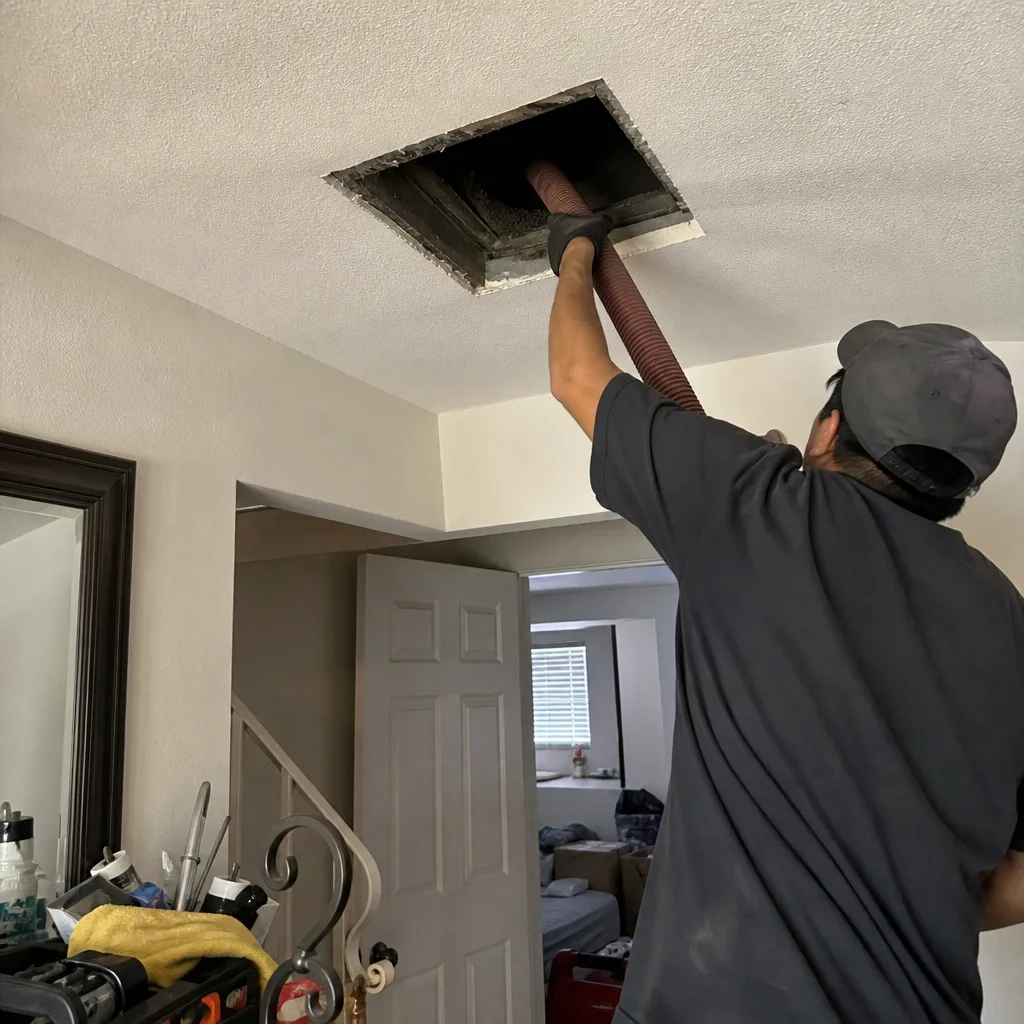 Before
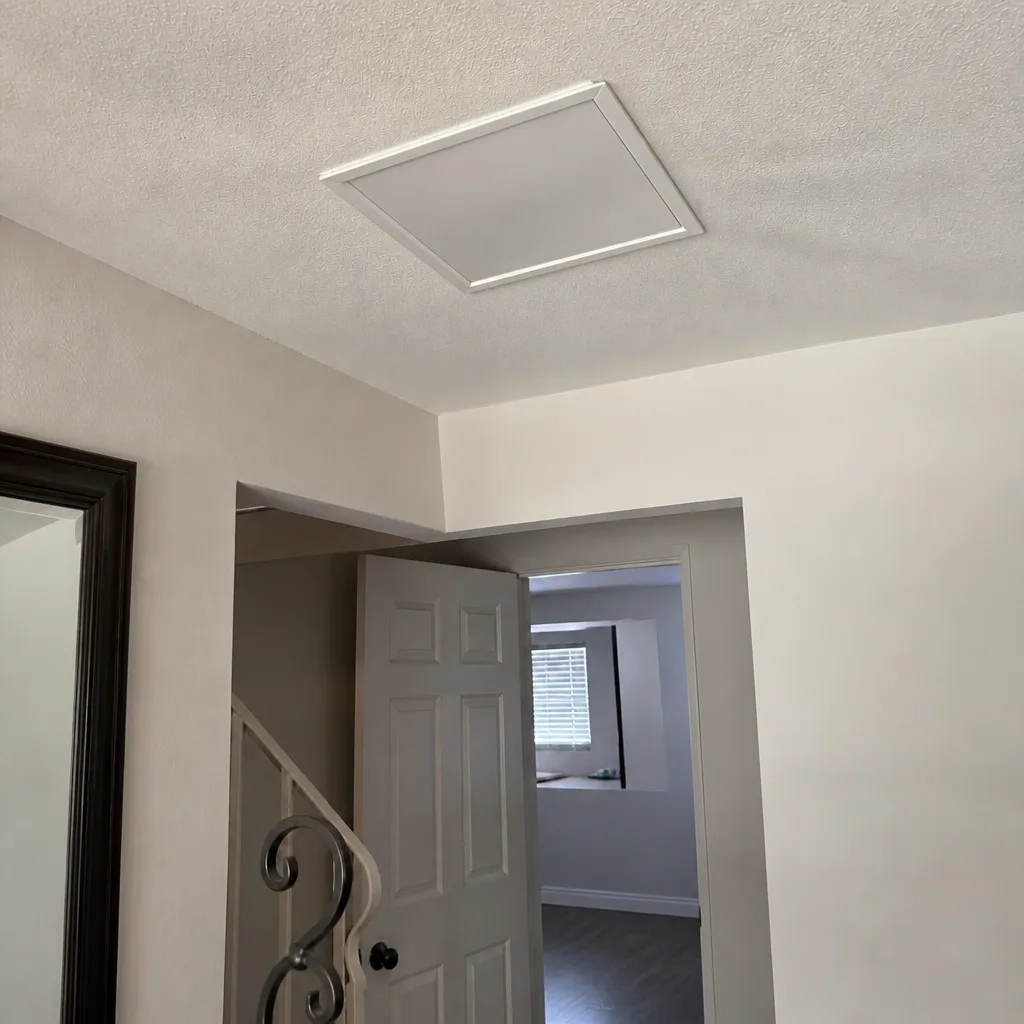 After
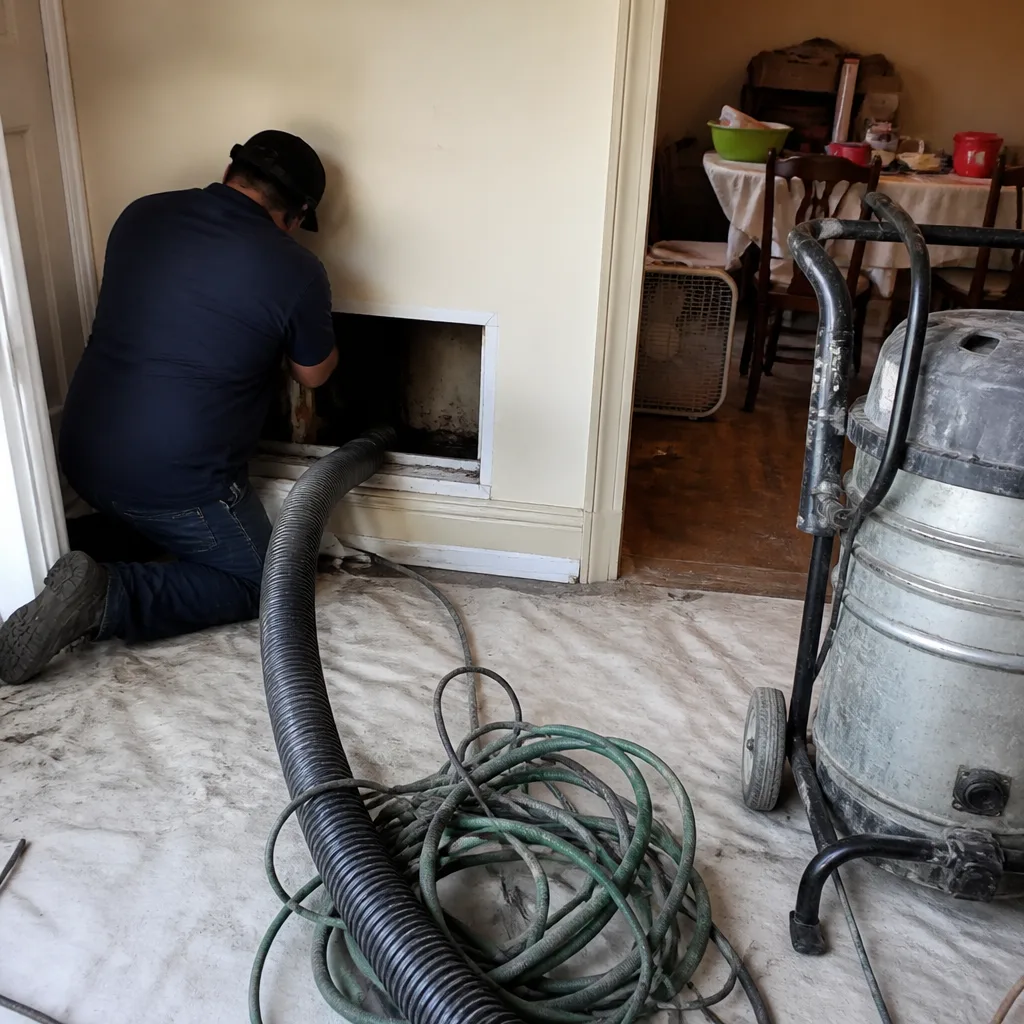 Before
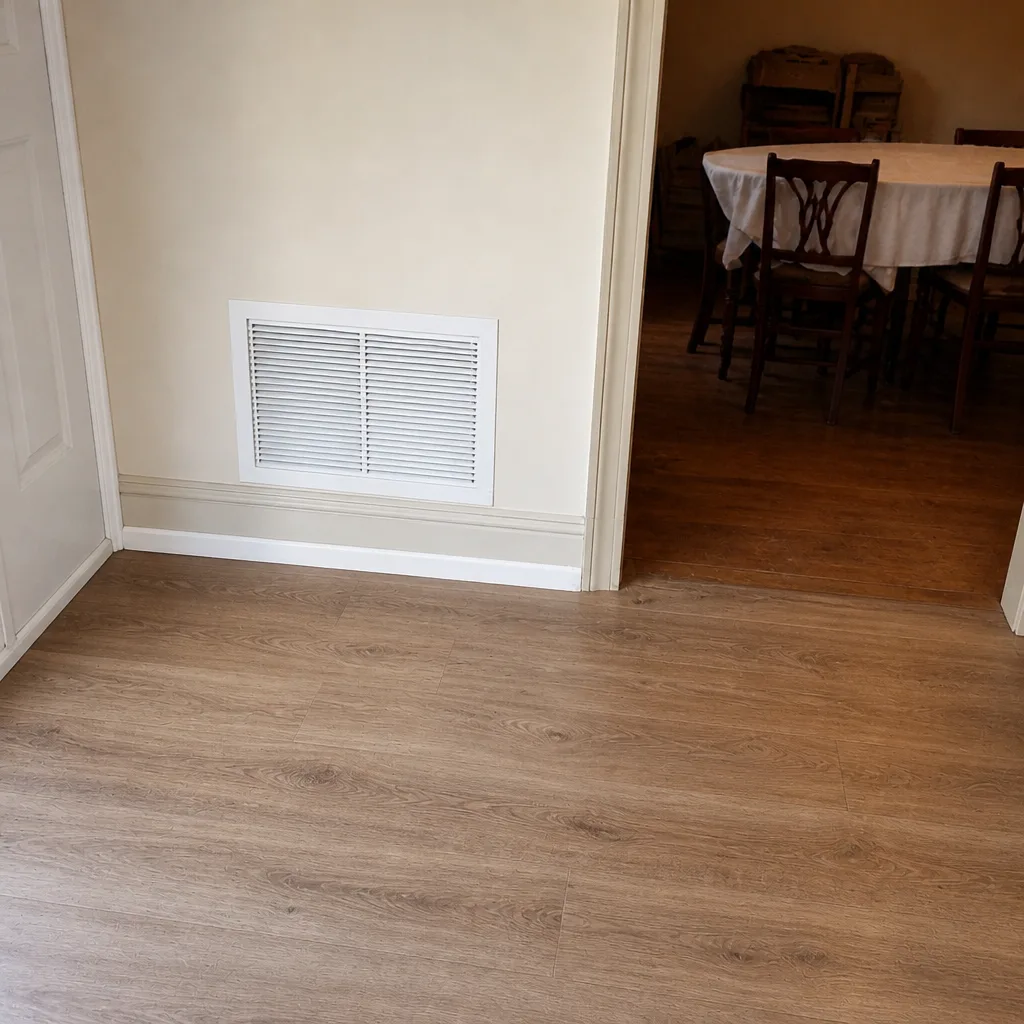 After
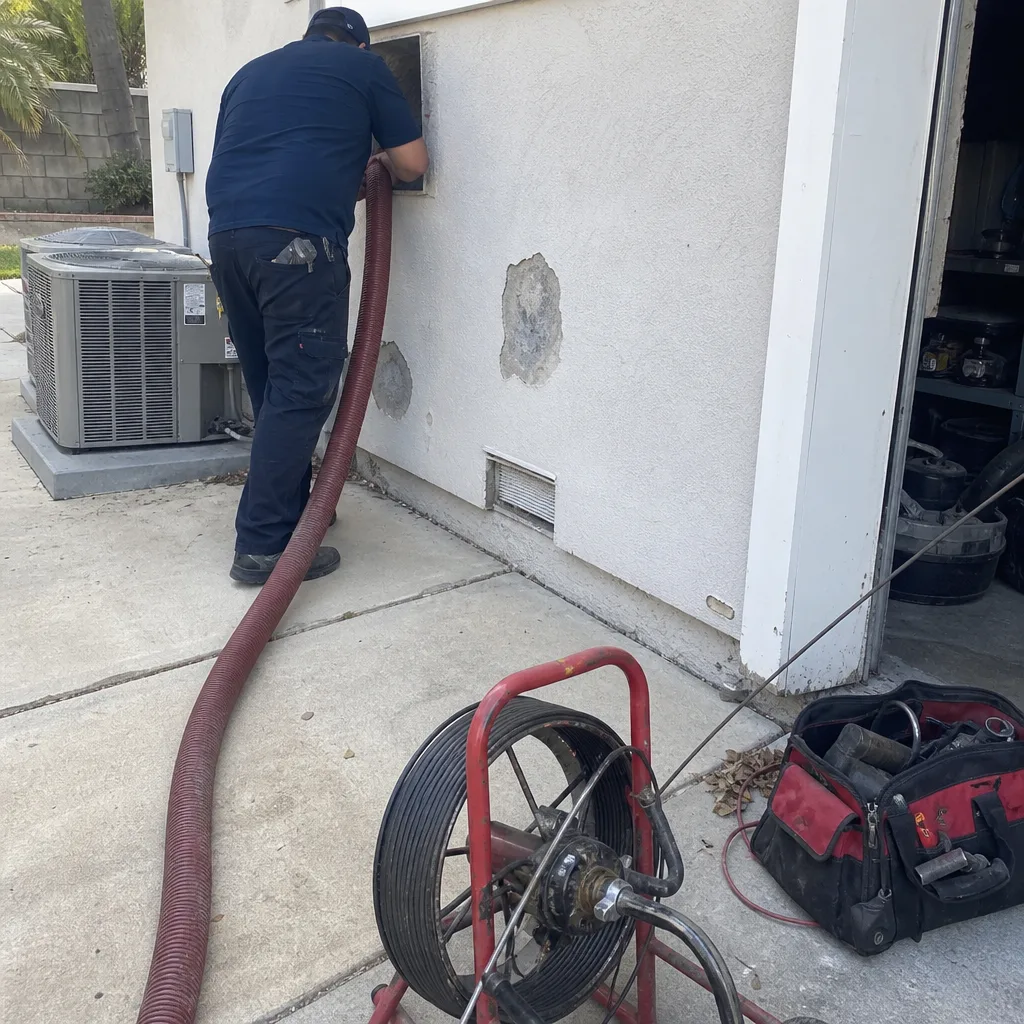 Before
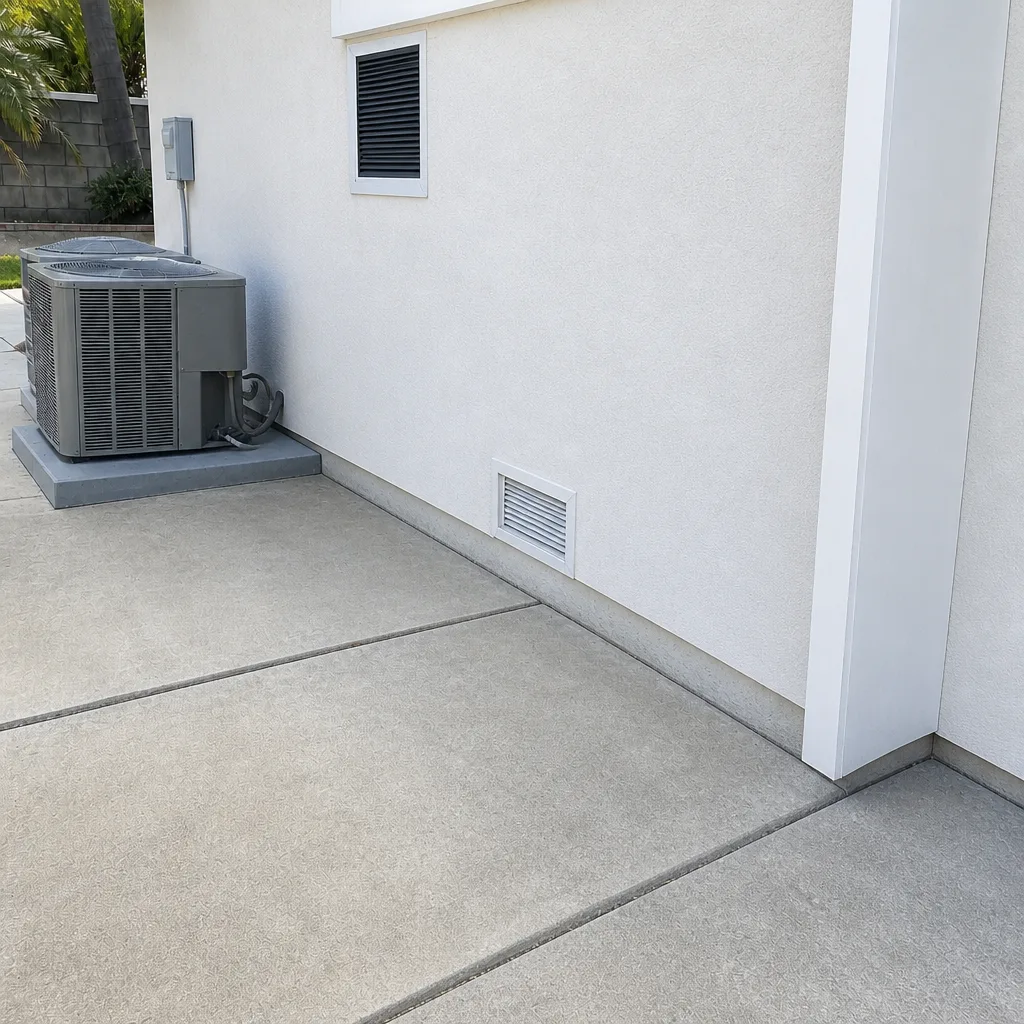 After
When to Call a Professional
Some duct problems announce themselves and some don’t. Call a professional when the dust in your home builds up faster than it used to, when a room never seems to get the airflow the rest of the house gets, when you notice a musty smell when the system kicks on, or when your energy bill climbs without a change in how you’re using the system. Call before you sign off on any repair a cleaning crew has quoted, and call before any add-on equipment goes inside the air handler. Those are the moments where a permit and a documented inspection make the difference between a fixed system and an unresolved one.
We handle San Clemente Air Duct Cleaning Pros work across the full air pathway: cleaning, dryer vent cleaning, HVAC cleaning, duct repair and sealing, and air quality and sanitizing. Our technicians have up to 10 years of experience, and we work with Honeywell and Aprilaire indoor air quality products when filtration upgrades are part of the fix. We answer 24/7. Fast dispatch from 7am to 7pm, Sunday through Friday. Call (866) 371-4884 for a free estimate.
Frequently Asked Questions
No. Routine air duct cleaning in San Clemente does not require a permit because it removes debris from a system that stays as built. Duct repair, flex duct replacement, plenum work, and add-on installations inside the air handler do generally require a mechanical permit through the City of San Clemente. Call (866) 371-4884 for an exact quote on your scope – estimates are free.
Generally yes. California’s Title 24 energy standards set duct leakage limits and require duct leakage testing when ducts are substantially replaced or when specified alterations occur. The test pressurizes the sealed duct system and measures how much air escapes, and the result is compared against the leakage limit that applies to the scope of the work. If the system fails, the contractor seals the leaks and retests. Call (866) 371-4884 if you need the testing scoped on a repair – estimates are free.
For addresses inside San Clemente city limits, the City of San Clemente’s building department issues the mechanical permit. Orange County’s jurisdiction covers unincorporated areas, not the residential neighborhoods inside the city. Ask your contractor which agency will issue the permit for your specific address, and get the answer in writing.
Yes, it can. An add-on like a UV purifier or an electrostatic filter modifies a pressurized air pathway, and if that modification isn’t documented as compliant with the manufacturer’s installation instructions and applicable code, the HVAC manufacturer can decline warranty coverage on components affected by it. Get the installation permitted, inspected, and documented, and register the component with the manufacturer. Call (866) 371-4884 to have an add-on installation scoped properly – estimates are free.
California’s Proposition 65 requires warnings for significant exposures to listed chemicals, and several common duct sanitizing products carry warnings. In practice, you should be told the product name, its active ingredients, any Proposition 65 warning, and the re-entry guidance before treatment begins. Federal OSHA ventilation standards also apply to workers using the products in confined areas. Ask for the product label before any chemical is introduced. Call (866) 371-4884 if you want the sanitizing scope written out for your home – estimates are free.
Three records do most of the work: the permit with its scope, the final inspection result from the city, and the contractor’s before-and-after photos of the ducts and any add-on installation location. Ask for all three at completion. A finaled permit is your strongest proof the work was reviewed by the city, and the photos are what let you confirm the work years later when the system needs service again. Call (866) 371-4884 for an exact quote on cleaning, repair, or both – estimates are free.
The Bottom Line
Cleaning your ducts doesn’t need a permit. Changing your ducts, sealing them, or adding equipment inside the air handler does, and in San Clemente that permit runs through the city’s building department, not the county. Flex duct replacement generally brings Title 24 duct leakage testing with it. Sanitizers fall under Proposition 65 and OSHA disclosure rules. And every add-on installed inside a pressurized air pathway should be permitted, inspected, and documented so it doesn’t cost you a warranty later. None of this is complicated once you know where the line sits. The contractors who do compliant work will document every step of it for you.
Contact Us
If you’re in San Clemente and you’re not sure whether the duct work you’ve been quoted is maintenance or a permitted modification, call and we’ll walk through the scope with you. We answer 24/7. Fast dispatch from 7am to 7pm, Sunday through Friday. Call (866) 371-4884 for a free estimate and a written scope before any work begins.
Written by the team at San Clemente Air Duct Cleaning Pros.