
Last updated November 25, 2026
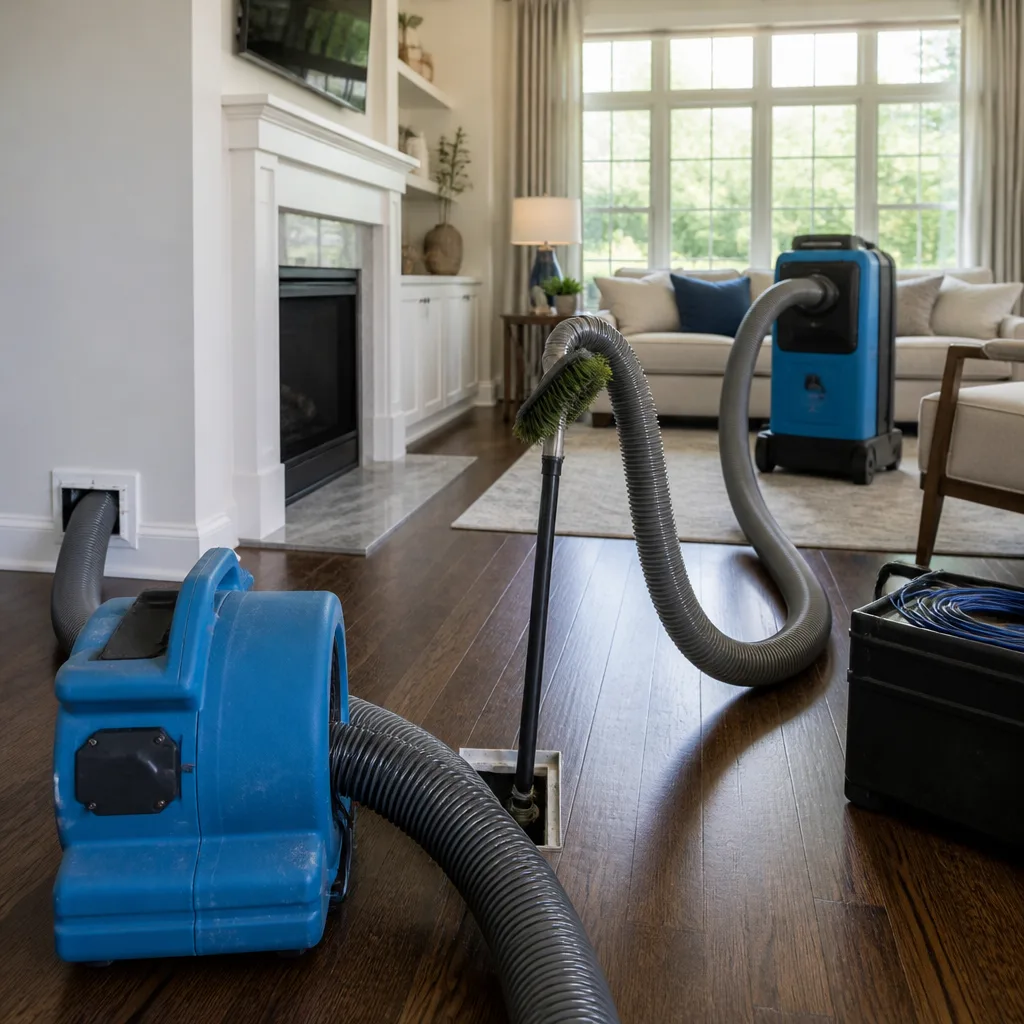 Whole-home duct cleaning
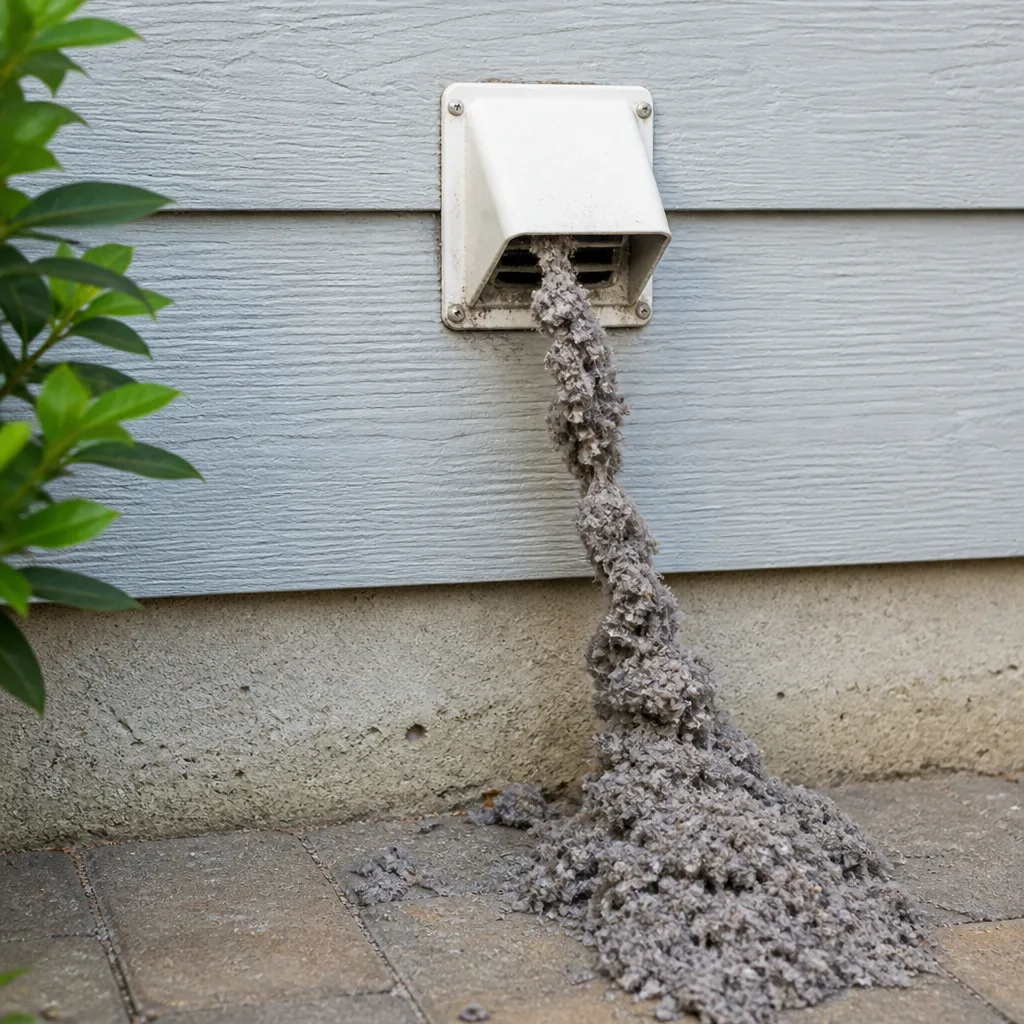 Dryer vent cleaning
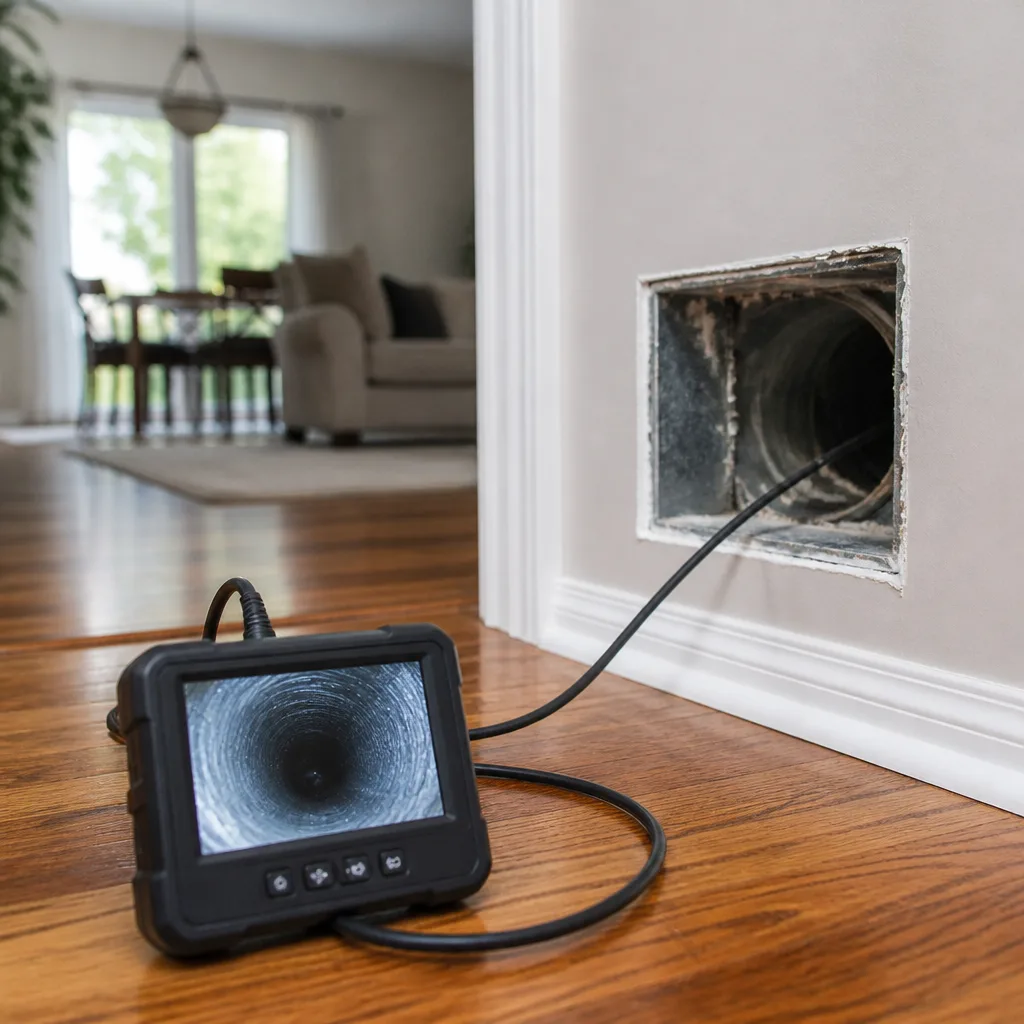 Camera inspection
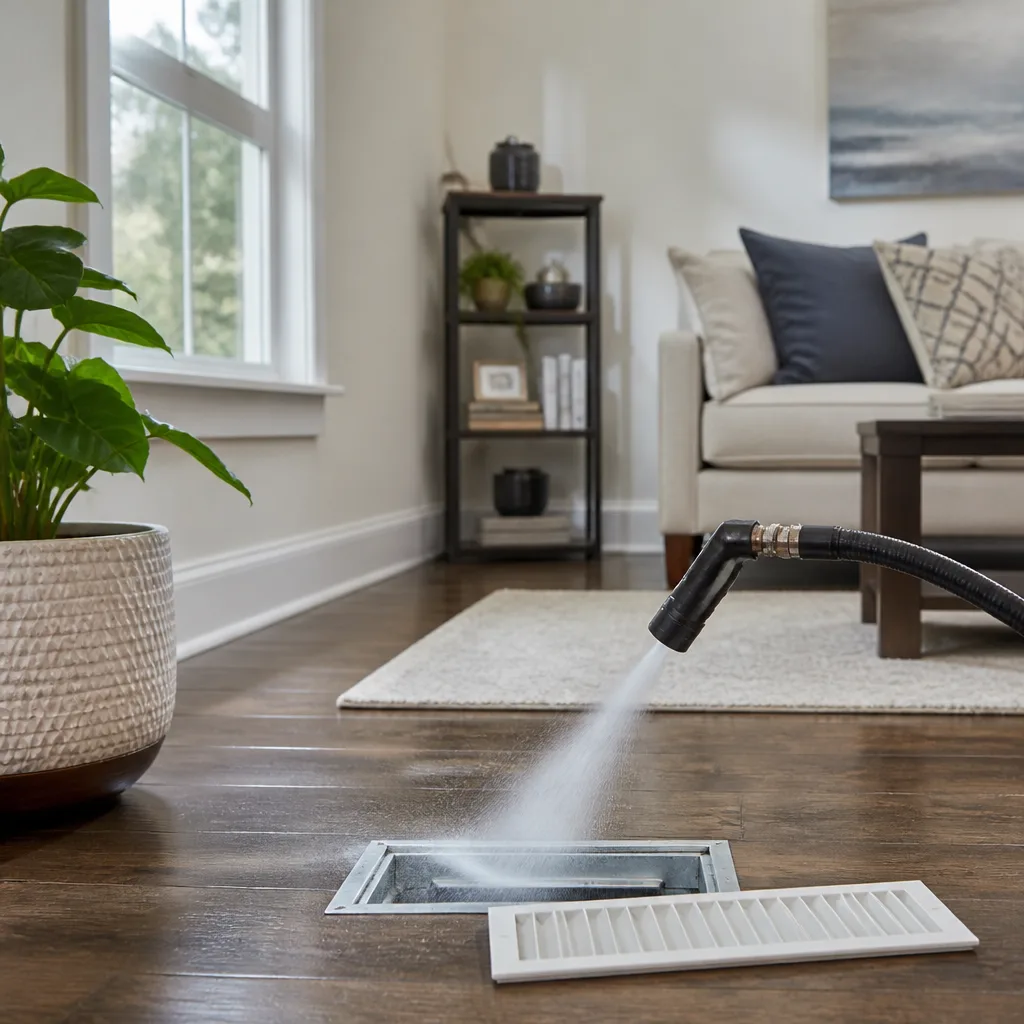 Sanitizing & deodorizing
Whole-system duct and dryer vent check with before-and-after photos - you see exactly what came out of your vents
That "$99 whole-house special" is a bait ad - the real number appears once they are in your hallway, or the "clean" is a shop-vac at the register. We photograph the inside of your ducts before and after instead.
Air Duct Cleaning Warning Signs: A San Clemente Homeowner’s Reference Guide
Most guides to duct problems point at the obvious: dust on the vent cover, hair wrapped around the register grille, a visible streak of grime above the ceiling diffuser. Those signs are real, but they show up late, after a system has been struggling for a long time. The signals that matter most in San Clemente homes are quieter than that. A musty smell that appears in one bedroom only when the HVAC kicks on isn’t a humidity problem. It’s contamination sitting inside a specific duct branch, and that branch has a physical location. It can be traced, opened, cleaned, and sealed. Masking it with a plug-in air freshener doesn’t move the problem, it just makes it harder to find. This guide walks through the subtle warning signs, how to tell what kind of contamination you’re dealing with, how to document what you find, and what each sign means for the scope of the fix.
Quick Answer
You likely need duct cleaning in San Clemente when you notice a musty or stale smell that appears only in certain rooms when the system runs, dust that returns to surfaces within days of cleaning, allergy symptoms that get worse indoors, uneven airflow between rooms, or energy bills that climb without any change in how you use the system. Localized smell or airflow problems usually mean one contaminated branch, while whole-house symptoms point to system-wide buildup or leaked ductwork. In an older San Clemente home, damage to the duct material itself is often the root cause.
Styles & brands we work with
- Whole-home duct cleaning
- Dryer vent cleaning
- Camera inspection
- Sanitizing & deodorizing
Table of Contents
- Localized Branch Problem vs. Whole-System Contamination
- Reading a Register: Dust, Mold, or Rodent Debris
- Why Rising Energy Bills Are Usually a Duct Leak, Not a Failing HVAC Unit
- Older San Clemente Housing Stock: Flex Duct and Asbestos-Wrapped Ducts
- How to Document and Photograph Warning Signs Before You Call
- Airflow Symptoms You Might Be Missing
- Dryer Vent Warning Signs That Don’t Get Enough Attention
- When to Call a Professional
Localized Branch Problem vs. Whole-System Contamination
The single most useful diagnostic habit a homeowner can build is to notice where a smell shows up and where it doesn’t. A musty odor in every room when the HVAC runs suggests contamination somewhere in the shared return or supply trunk. A musty odor that appears only in a specific bedroom, hallway bathroom, or the corner of a living room points to that branch alone. The location is a clue, and in most cases it’s a reliable one.
Walk the house with the system running and a pen in hand. Write down each room where you catch an odor, then each room where the airflow feels noticeably weaker than the rest of the house. Rooms with their own dedicated duct runs that read as “off” compared to the rest are the ones worth checking first.
- Turn the system on and let it run for a full cycle so the smell has time to reach you.
- Stand still in each room for thirty seconds, mid-room, not directly in front of a register.
- Note which rooms smell musty, which smell neutral, and which rooms you can’t smell at all.
- Hold a tissue up to each supply register to gauge airflow strength. A fluttering tissue is normal. A tissue that barely moves means the branch is restricted or the damper is nearly closed.
- Repeat in the return grilles. Weak return pull in a single zone often means the return branch is clogged or else the ceiling gap around the grille has been painted over or blocked.
What this tells you: an isolated smell with normal airflow usually means surface contamination on the duct interior. An isolated smell with weak airflow usually means a blockage, a collapsed duct, or a disconnected joint. Both are addressable, but the second one is a repair situation, and cleaning alone won’t fix it. That distinction matters, because air duct cleaning without a repair leaves a broken connection intact.
Whole-system symptoms read differently. If every room carries the same faint musty note, or if dust returns to every flat surface within three or four days of a deep cleaning, the contamination is upstream of the branches. The return trunk, the air handler cabinet, or the evaporator coil plenum is the likely site.
Reading a Register: Dust, Mold, or Rodent Debris
Not all buildup at a register means the same thing. The material itself tells you what’s happening inside the duct, and it tells you how big the remediation is going to be. Look before you clean. Photograph first, then clean, because once you’ve wiped the grille you’ve destroyed your evidence.
Normal dust accumulation looks like an even gray film on the grille fins and the outer ceiling surface near the register. It’s fine, dry, and wipes off without resistance. All systems accumulate this. It reflects ordinary filter loading and register-turbulence dust, not duct contamination. If this is the only thing you see, you may be looking at a filter and cleaning schedule issue rather than a duct problem.
Active mold colonization looks different in three ways. It’s dark (black, green, or blotchy), it has visible structure (not just grainy dust), and it usually concentrates near the register throat where moisture has been able to settle. Faint musty odor plus a blotchy dark pattern on the duct interior visible with a flashlight is the classic combination. Visible mold inside an air pathway is worth treating as a genuine indoor air problem and not a cosmetic one. It also means the moisture source needs to be found, because mold that’s scraped away from a wet duct will return.
Rodent debris is the third category. Droppings look like small dark pellets, roughly rice-grain sized, concentrated in areas where the duct has a low point or a gap. Chewed duct material, shredded insulation, and a faint ammonia or urine smell are other tells. Rodent activity inside a duct system is not a cleaning-only situation. The entry point has to be sealed and the duct interior has to be cleaned, sanitized, and usually has to have damaged sections replaced.
What each one means for scope:
- Light gray surface dust at the register only: filter change and a register wipe-down, duct cleaning may not be necessary yet.
- Dust return within days of cleaning whole rooms: contamination is system-wide, cleaning is appropriate.
- Blotchy dark growth plus musty odor: contamination, plus a moisture-source diagnosis, plus sanitizing treatment.
- Pellets, chewed insulation, or ammonia odor: rodent remediation, sealing, cleaning, sanitizing, and usually a duct repair.
In San Clemente homes, especially those that sit empty between tenants or see seasonal use, the second and third categories show up more often than owners expect. Once the smell is noticeable, colonization has usually been underway for months.
Why Rising Energy Bills Are Usually a Duct Leak, Not a Failing HVAC Unit
When the electric bill climbs and the house doesn’t quite cool the way it used to, the instinct is to blame the air conditioner. Sometimes that’s right. In our experience on San Clemente jobs, it’s more often the ductwork. Here’s why: a central system doesn’t push air only into the living space, it also leaks at every joint, collar, and boot that has loosened over the years. In an attic or crawlspace, a leaking joint loses conditioned air before it reaches a room, and that air is replaced by hot outside air the system then has to cool all over again. The result looks like a failing HVAC unit while the equipment is often running exactly as designed.
Testing the difference doesn’t require equipment. Try this sequence:
- Measure the temperature of the air blowing from a supply register after the system has run for fifteen minutes. A cheap digital probe thermometer works. Write the number down.
- Measure the temperature of the air at the return grille with the system running. Write that down too.
- Subtract the return reading from the supply reading. The difference is your system’s temperature split. A healthy split is usually substantial (a number you’d notice as a noticeable difference, not a couple of degrees). A split under roughly eight degrees is a sign the system isn’t moving cold air effectively.
- Check whether some rooms are getting cold and others aren’t. Uneven cooling with a weak overall split points hard at distribution, not equipment.
- Walk the attic or crawlspace where ducts are exposed, if you can safely do so. Look for sagging flex, disconnected collars, or duct runs that have fallen off their support straps. Don’t climb on roof framing or into a tight, unstable space – have a technician handle the inspection if access isn’t safe.
A weak temperature split plus some rooms that cool fine and others that don’t usually means the cold air is being delivered but escaping before it reaches the problem rooms. That’s a duct leakage and repair situation, and the fix is sealing every joint that’s leaking. If the split is weak in every room, the equipment itself or a dirty evaporator coil is the more likely culprit, and a proper HVAC cleaning solves half of those cases on its own.
Air sealing is also the piece that makes cleaning last. Duct cleaning that doesn’t include sealing is only removing the food supply for future contamination. The seams that leaked dust in will let dust back in.
Older San Clemente Housing Stock: Flex Duct and Asbestos-Wrapped Ducts
San Clemente has a lot of homes in the older neighborhood corridors – Talega and Marblehead among them – where the original duct system is now several decades old. Original materials matter here, and two categories come up often enough to know about before you call anyone.
Fiberglass flex duct was common through the 1980s. The outer vapor barrier is a thin plastic sleeve; the interior is a wire helix wrapped in insulation, then a smooth liner. After decades of attic heat cycling (and in San Clemente, plenty of hot afternoons), that liner begins to break down. You’ll see flaking liner material collecting inside the duct, worn spots where the wire helix has broken through, or collapses where the duct has lost support and sagged closed. A collapsed flex duct doesn’t just lose airflow, it holds moisture at the low point, which is where mold tends to establish first. A duct interior that has physically deteriorated is replace-now territory, not clean-now territory. Cleaning a collapsing flex run and reinstalling it is wasted effort.
Asbestos-wrapped rigid duct and older duct wrap is the second consideration. Homes built or re-ducted in the mid-20th century sometimes have ducts wrapped in a gray corrugated paper or cloth-like material, or insulating board that can contain asbestos. It cannot be identified by looking. The safe approach is to have the material tested before any duct work disturbs it. If the material turns out to be asbestos-containing, the wrap has to be handled by a licensed abatement professional before duct cleaning or repair can proceed. A duct cleaner who starts cutting into that material without testing is creating a hazard. Ask any contractor what their policy is on unknown duct wrap in homes of this era. A careful answer is what you want to hear.
Beyond materials, the duct layout in these older homes often involves shorter runs, tighter attic clearances, and original collars that were never sealed as well as modern practice. Duct Repair & Sealing is a common need on these homes even when the ducts are still sound. Leaking collars and disconnected boots at floor registers are the most frequent offenders we find, and they’re usually not obvious until the register is lifted.
How to Document and Photograph Warning Signs Before You Call
The single best way to protect yourself from being sold a service you don’t need is to have your own record of what the house was doing before anyone arrived. Photographs and notes on your phone are enough. The idea is simple: when the estimating technician walks through, you compare their findings against yours. If they point out the same musty smell in the office that you already noticed, that’s a good sign. If they claim a whole-house contamination problem and you only ever smelled it in one bedroom, ask why the rest of the house didn’t smell. The technician may be right, and may have a good reason, but the question is fair.
Documentation set to gather before the call:
- Photographs of each supply register with the grille in place, from directly below. Do this in good light, before you wipe anything.
- Photographs of each register with the grille lifted, showing the visible duct interior throat. Use your phone’s flash – the interior is dark.
- Close-up photographs of any blotchy dark growth, pellets, or chewed material. Include a coin or tape measure next to a dropping for scale.
- A room-by-room list of which rooms smell musty and which don’t, and at what time of day you notice the smell most.
- Temperature readings from a supply and a return register, both taken at the same time, with the numbers written down.
- Copies of three or four recent electric bills (for comparison across months, not for the technician to read aloud).
- A note of any recent work done on the HVAC system, roof, or attic, and the approximate time frame.
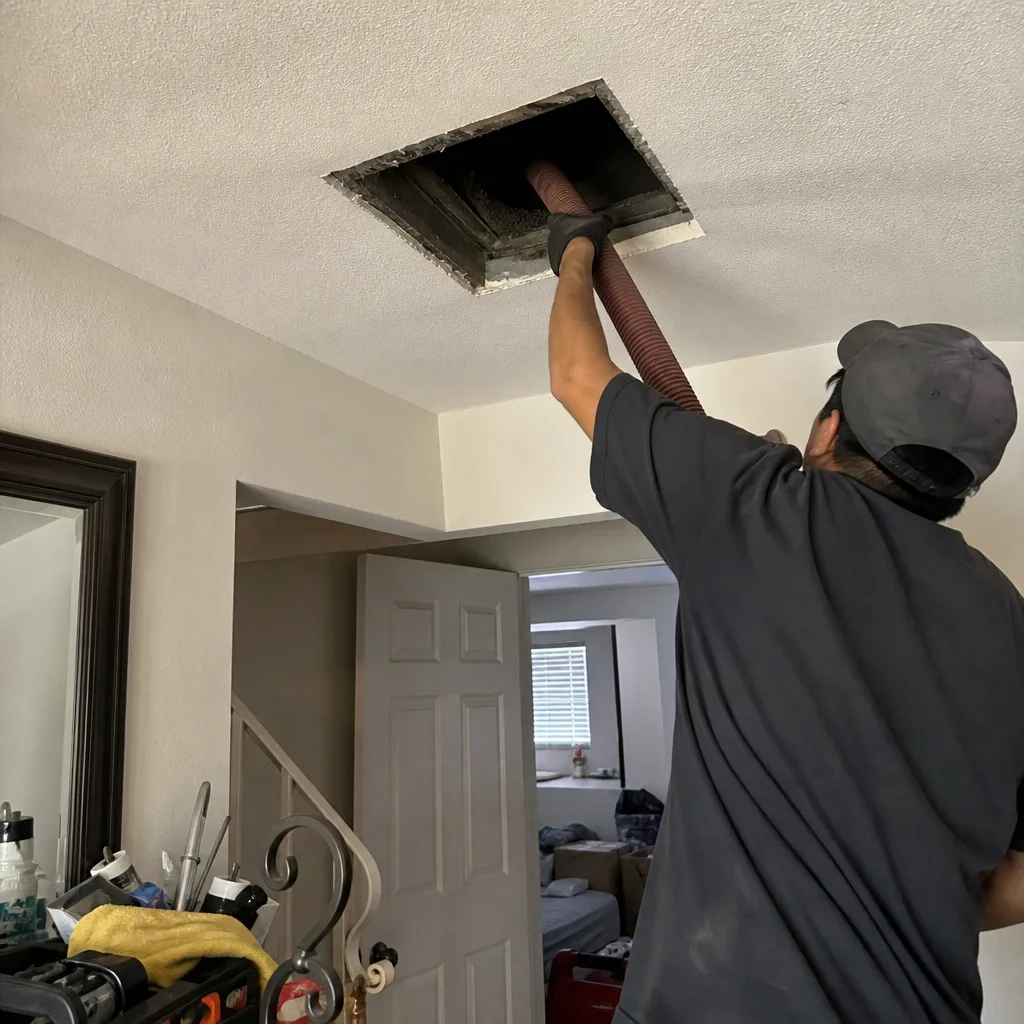
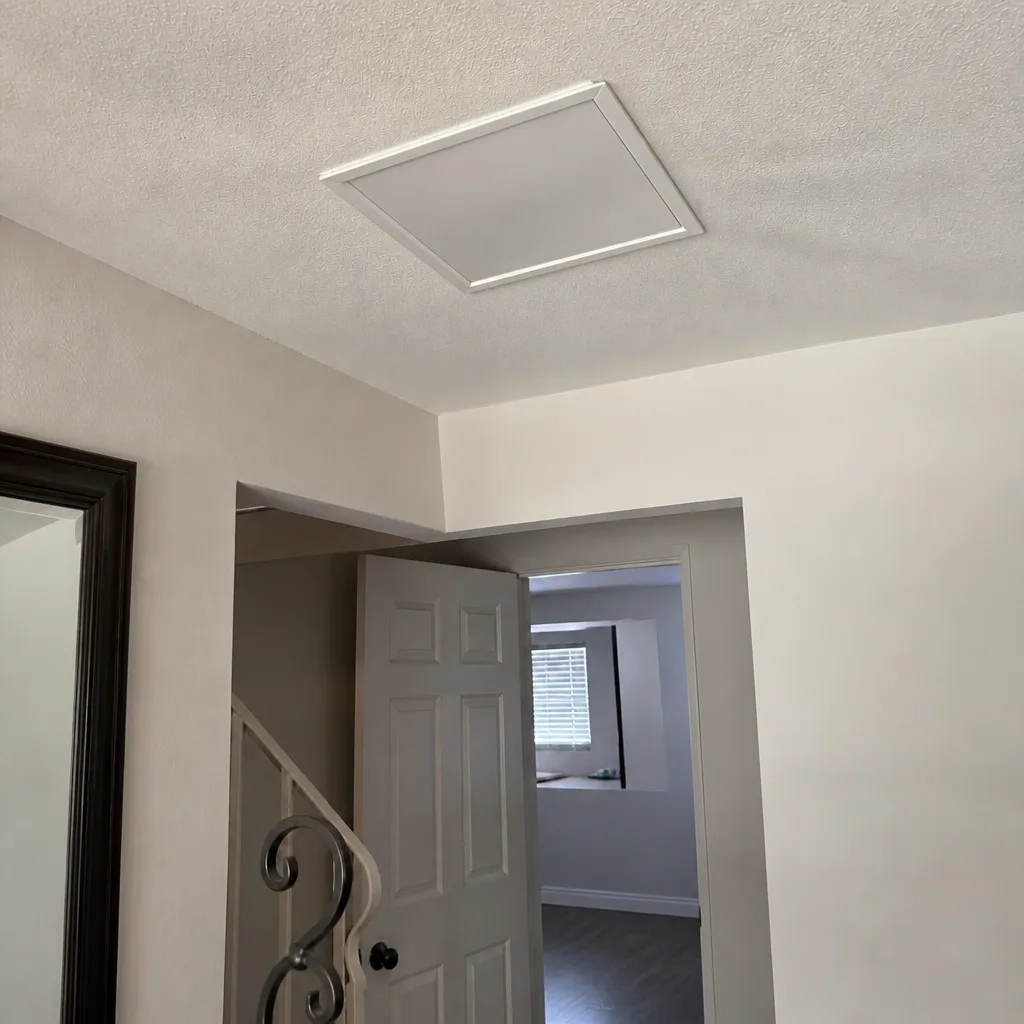
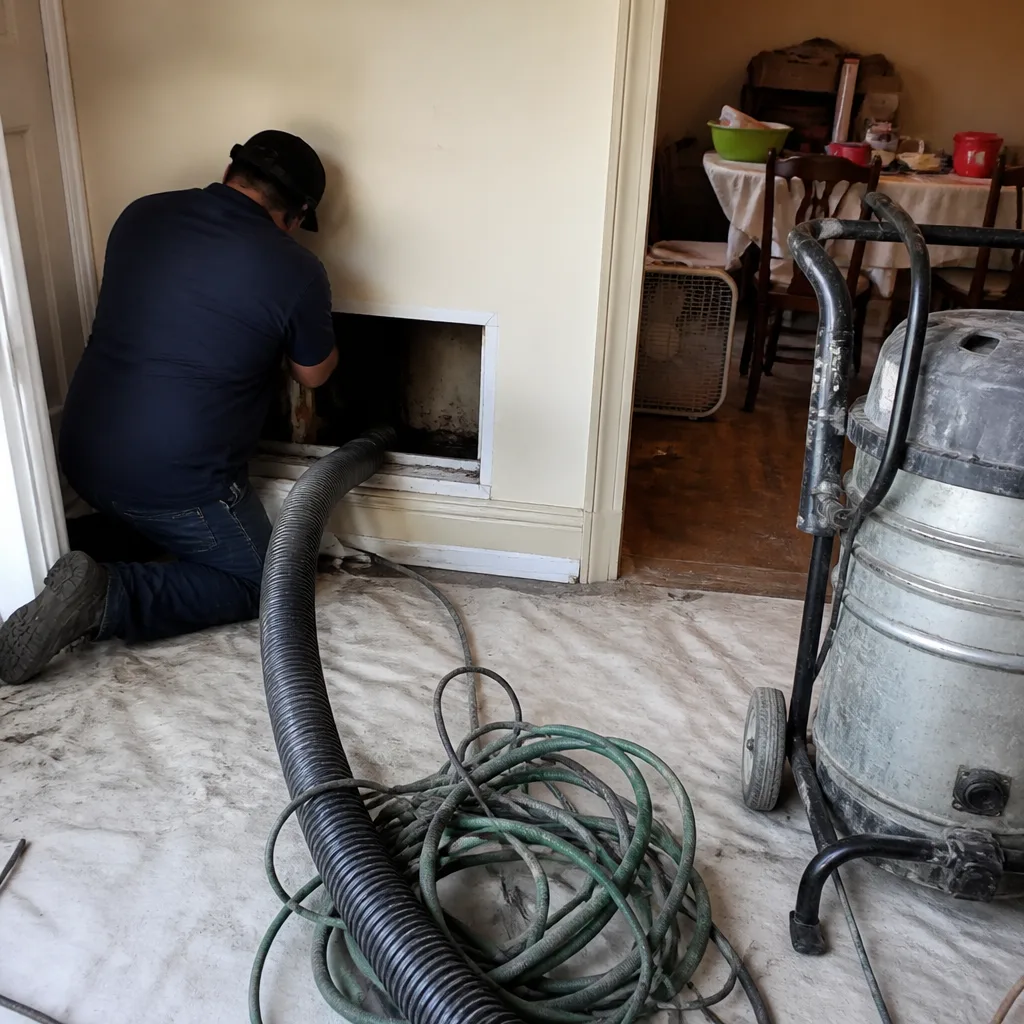
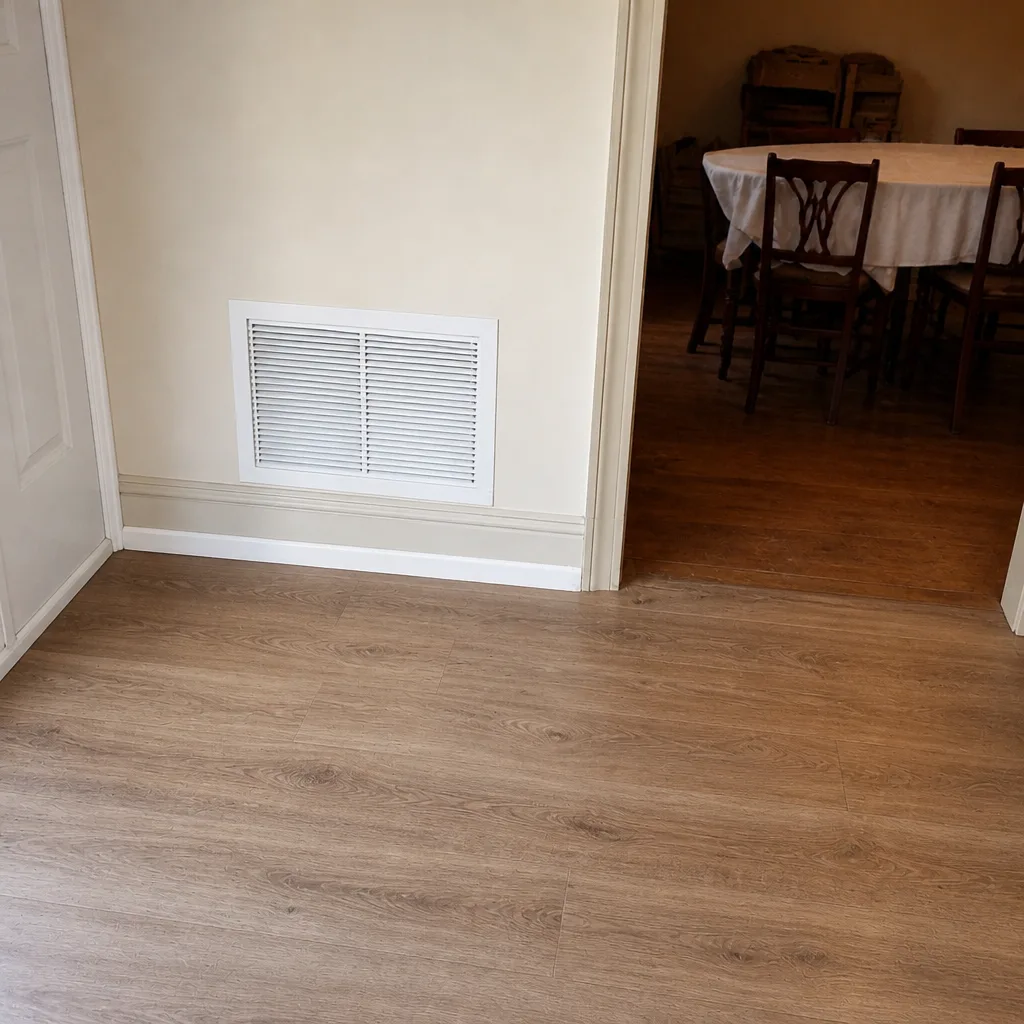
When the technician arrives, ask them to show you their findings as they go. A qualified crew using professional equipment will produce before-and-after photographs of the duct interior during the cleaning. Ask to see them. If the job was performed with a Rotobrush or Nikro system, before-and-after imaging is standard practice, and the shots should be of your ducts, not stock images.
One more documentation step: if you’ve already scheduled an appointment and you have photos taken before the visit, take the same photographs after the visit from the same angles. The comparison is the most reliable record of whether the work happened as described, and it gives you a paper trail if anything needs to be revisited.
Airflow Symptoms You Might Be Missing
Airflow is the warning sign most homeowners don’t think to check. Weak flow in one room tends to get blamed on the room being “far from the unit,” when in fact the actual problem is often a restricted or disconnected branch. A duct system doesn’t fail evenly, and the room that cools slowest is usually the room with the weakest branch.
Other airflow signals worth noting:
- Whistling or hissing at a single register. Usually a partial blockage or a closed damper. Sometimes it’s a disconnected collar that’s now pulling attic air.
- A register that rattles or shakes. Often a loose boot or a duct run that’s lost its support strap. Not dangerous, but usually means the connection is failing.
- Air coming out of a register when the system is on but the airflow is warm. Frequently a leaking duct joint letting hot attic air mix in.
- Different airflow strength between rooms that used to feel the same. The clearest signal of progressive duct failure. Write down room names and compare notes month to month.
- Cold spots or warm spots that only appear in certain rooms, not the whole house. Room-specific temperature problems almost always mean a distribution issue, not an equipment problem.
On the whole-house side, weak airflow in every room tends to point at a dirty evaporator coil, a heavily loaded filter, or a blower that’s no longer performing to spec. That’s where a full HVAC cleaning enters the conversation. Ducts that are clean but downstream of a loaded coil will re-contaminate quickly, so the coil, blower, and cabinet are part of the picture before the ducts are cleaned.
The distinctive local detail here is that a San Clemente home can feel cool when the system first starts and then progressively weaken in the course of an afternoon. That pattern, rather than outright failure, is often the earliest sign of duct leakage. The system is producing cool air; the joints are just letting it go.
Dryer Vent Warning Signs That Don’t Get Enough Attention
Dryer vent issues get talked about far less than duct issues, but they matter to the same homeowner and often show up in the same troubleshooting conversation. The signs are usually about time and heat rather than smell.
- Clothes take two cycles to dry when one was enough before.
- The dryer feels hot to the touch on top or at the door.
- The laundry room feels more humid than it used to.
- Lint is visible around the outside vent flap and the flap doesn’t move freely.
- A faint burning or hot-dust smell when the dryer runs.
The reason these signs warrant attention is that lint accumulation in the vent line reduces airflow, and reduced airflow is what makes a dryer work harder and take longer. Getting the vent properly cleaned restores both drying time and safety. If the home has a long, winding vent run, or a run that terminates behind a screen rather than a proper exterior flap, buildup happens faster. We handle this through dryer vent cleaning as a standalone service, and we recommend it be checked alongside any duct cleaning appointment in homes where the laundry area shares space with the attic or garage duct routing.
When you document dryer vent signs, photograph the vent flap from outside, the lint filter area, and any visible lint at the exterior vent termination. That record helps identify whether the buildup is at the exterior end (easy access) or along the run (requires proper equipment).
Common Mistakes to Avoid
- Masking a musty smell with air freshener or ozone plugins. The smell is a symptom of a physical problem inside a specific duct branch. Masking it delays the fix and makes it harder to trace the source later.
- Wiping registers before photographing. Once you’ve cleaned the grille, you’ve destroyed the clearest evidence of what’s actually inside. Photograph first, always, on any register in a house you haven’t had inspected before.
- Assuming duct cleaning on the whole house will solve one-room symptoms. If the smell is confined to one bedroom, a whole-house cleaning is a reasonable starting point but the specific branch has to be addressed. Ask the estimating technician what they plan to do about that room.
- Ignoring the temperature split in favor of “the AC feels weak.” Measuring supply and return temperatures and writing the numbers down takes ten minutes and tells you immediately whether the problem is the equipment or the ducts.
- Choosing a contractor by the lowest quoted price alone. Duct work is a whole-system job, and pricing varies widely by scope. A price that’s lower than everything else usually means less of the system is actually being addressed. One flat price per system, agreed before work starts, is the standard to ask for.
- Letting a contractor cut into unknown duct wrap in an older San Clemente home without testing first. Older duct wrap can contain asbestos. Ask about testing procedure before any work begins in a home of this era.
- Scheduling a cleaning without a plan for sealing. Cleaning removes what’s there. Sealing prevents dust from re-entering through the same leaks. Skipping the second step means repeating the first.
See the difference
 Before
 After
 Before
 After
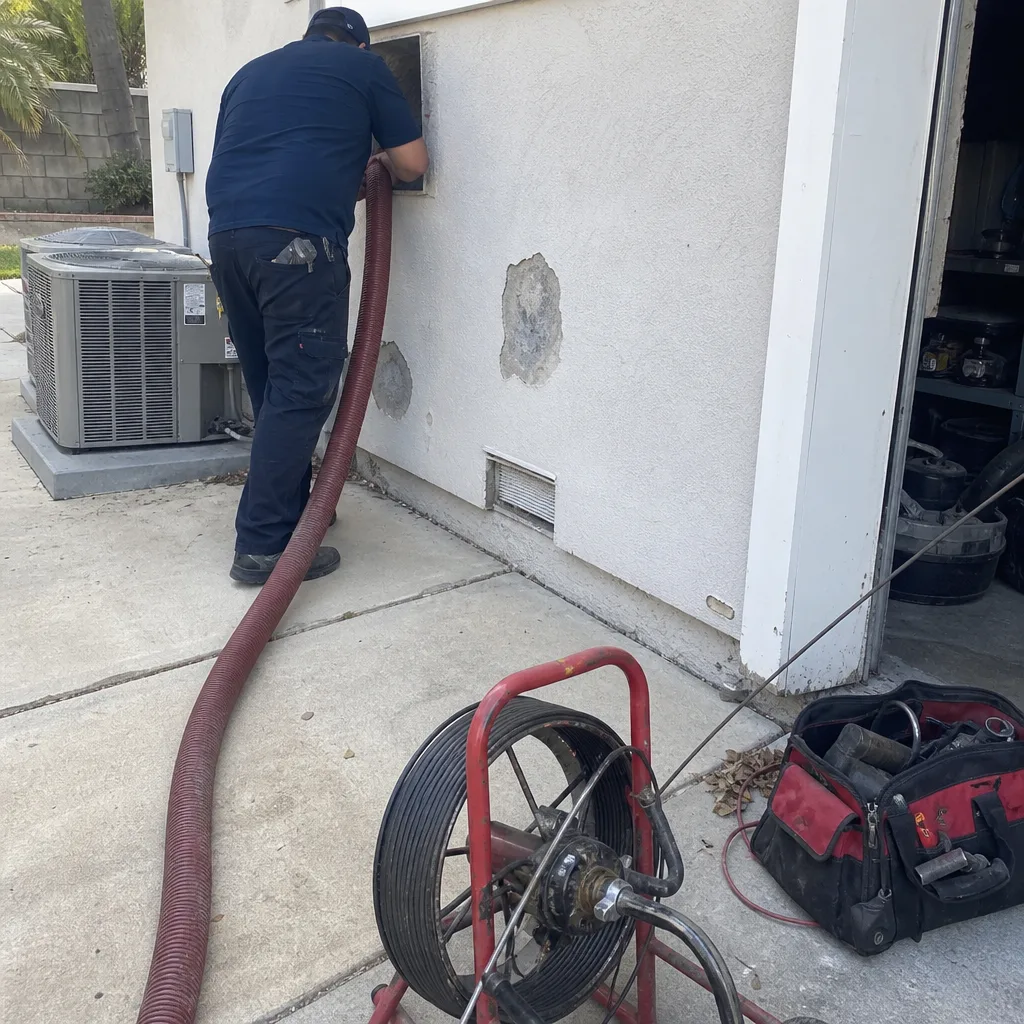 Before
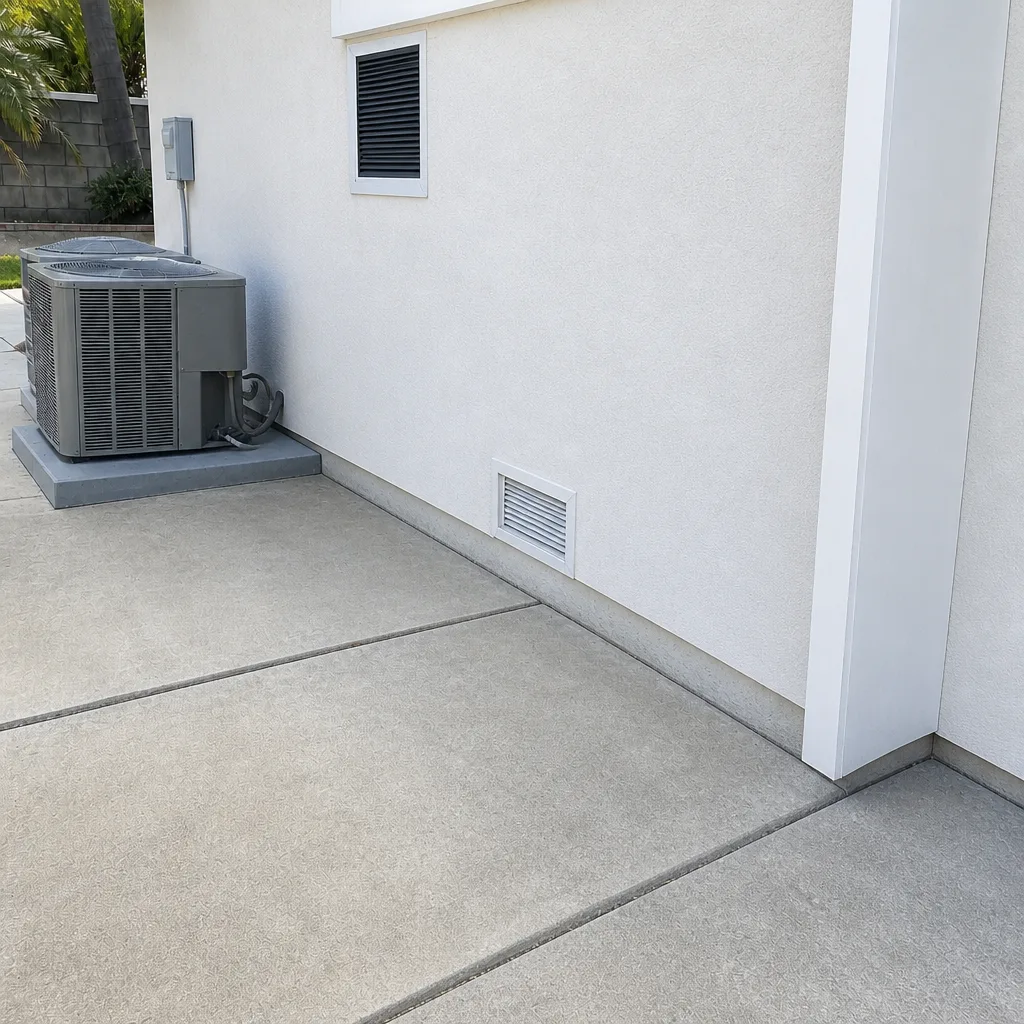 After
When to Call a Professional
Call for an inspection when you notice a persistent musty smell that returns every time the HVAC runs, when dust returns to surfaces within days of cleaning, when the temperature split between supply and return is weak, or when you see evidence of mold growth or rodent activity anywhere inside the air pathway. In an older San Clemente home, also call if duct wrap looks unfamiliar or degraded – the test-before-cutting rule matters here. Documentation first: register photographs, room-by-room smell notes, and temperature readings. When the technician arrives, ask for before-and-after photographs of the interior work. San Clemente Air Duct Cleaning Pros offers free estimates in San Clemente – call (866) 371-4884. We answer 24/7. Fast dispatch from 7am to 7pm, Sunday through Friday. Our technicians have up to 10 years of experience, use Rotobrush and Nikro duct cleaning systems on every job, and handle cleaning, duct repair and sealing, HVAC cleaning, dryer vent work, and sanitizing as one integrated visit.
Frequently Asked Questions
Air duct cleaning in San Clemente is priced per system rather than per vent, so a fair quote is a single flat price for the whole system, agreed before work starts. The written estimate sets the final price, and estimates are typically free. Any contractor quoting a very low teaser number that jumps once the technician is on site is running a bait-and-switch pattern. Ask for a flat whole-system price in writing. Call (866) 371-4884 for an exact quote – estimates are free.
Cheap quotes usually reflect a partial job, not a better price. Per-vent pricing with a low count, jobs that clean only accessible supply runs, cleaning without a repair and seal step, and unverified equipment are common shortcuts. A full-system quote using professional equipment (Rotobrush and Nikro systems, for example) covers the supply and return runs, the air handler cabinet, and any repair and sealing needed. If a quote comes in sharply lower than others, ask specifically what the quote covers. Call (866) 371-4884 for an itemized, flat-price estimate – estimates are free.
Ask for before-and-after photographs of your duct interior, taken from the same angles. A professional crew using Rotobrush or Nikro equipment captures these as a matter of course. Also take your own photographs before the visit so you have your own record to compare against. If any part of the work was supposed to fix a specific symptom (like a musty smell in one room), check that symptom after the visit. Call (866) 371-4884 with follow-up questions after any appointment – estimates for additional work are free.
Most homes need duct cleaning every few years, not annually, though the right interval depends on your specific system. San Clemente homes with pets, recent remodeling dust, rodent activity, or moisture problems fall into shorter intervals. Homes with clean systems, good filters, and no known leaks can stretch further. The best rule is to check for warning signs rather than follow a fixed schedule. Call (866) 371-4884 to talk through timing – estimates are free.
A localized smell usually indicates contamination in one specific duct branch, not the whole system, but the branch is connected to the trunk and the fix has to address both. A whole-system clean plus targeted attention on the affected branch is the usual approach. Duct Repair & Sealing is also worth evaluating in that room, because a disconnected collar or boot on that branch is often the entry point for whatever is causing the smell. Call (866) 371-4884 to schedule an inspection – estimates are free.
Older duct wrap in mid-century homes can contain asbestos, and it cannot be identified by looking at it. Any duct work has to be preceded by testing of the wrap material; if it tests positive, abatement by a licensed asbestos professional is required before cleaning or repair. Ask any contractor to describe their policy on unknown duct wrap. If they can’t explain their approach clearly, that’s a signal to choose a different contractor. Call (866) 371-4884 for questions about duct cleaning in an older San Clemente home – estimates are free.
The Bottom Line
The warning signs that matter most in San Clemente are the ones that build quietly: a musty smell confined to one room, dust that returns within days, uneven airflow between rooms, energy bills that climb without management change, and the sound of a duct that’s failing at a joint. Read the register and you can tell which kind of contamination you’re looking at. Measure the temperature split and you can tell whether the issue is distribution or equipment. In an older home, check what your ducts are made of before anyone cuts into them. Document what you saw before the crew arrives, so you can compare their findings against yours. Air duct cleaning earns its value when it’s paired with duct repair and sealing so the fix holds.
If any of the signs in this guide have been building in your San Clemente home, call San Clemente Air Duct Cleaning Pros at (866) 371-4884 for a free estimate. We answer 24/7. Fast dispatch from 7am to 7pm, Sunday through Friday.
Written by the team at San Clemente Air Duct Cleaning Pros.