
Last updated November 25, 2026
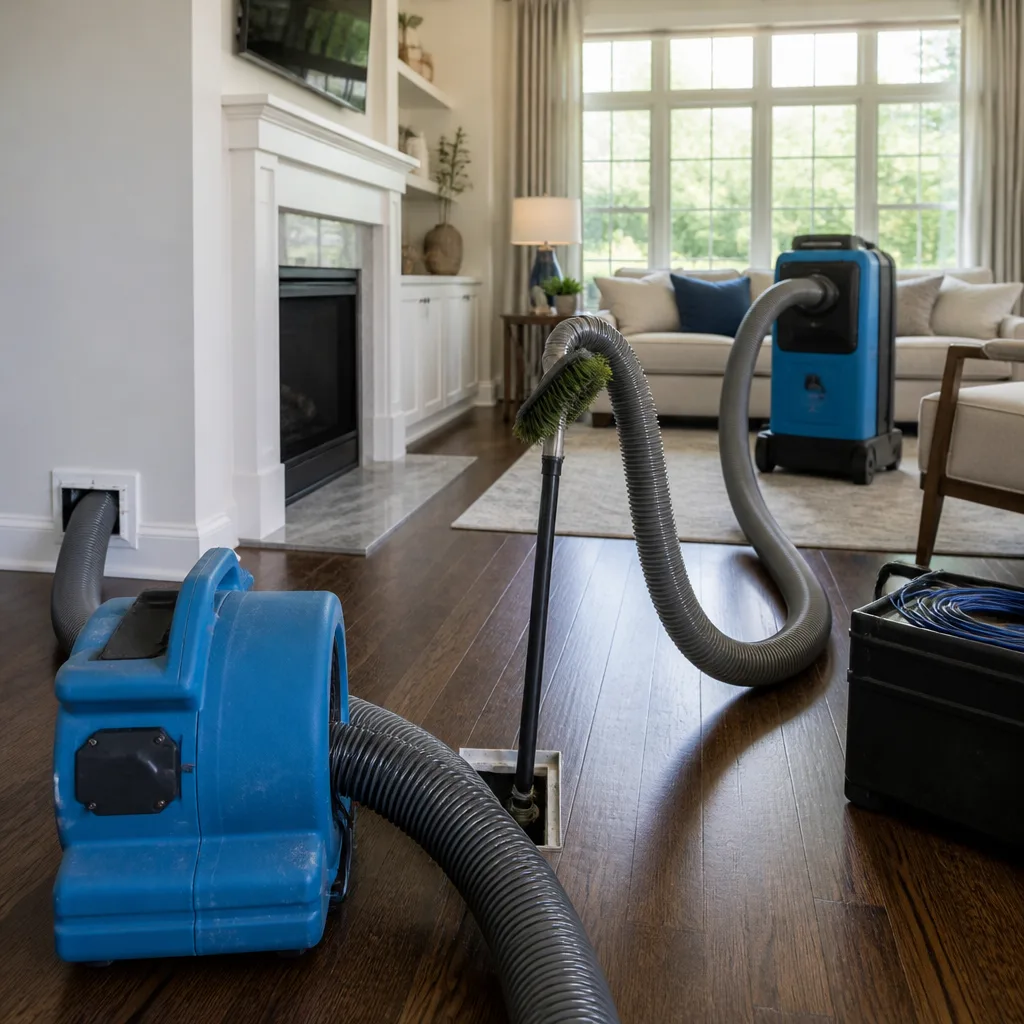 Whole-home duct cleaning
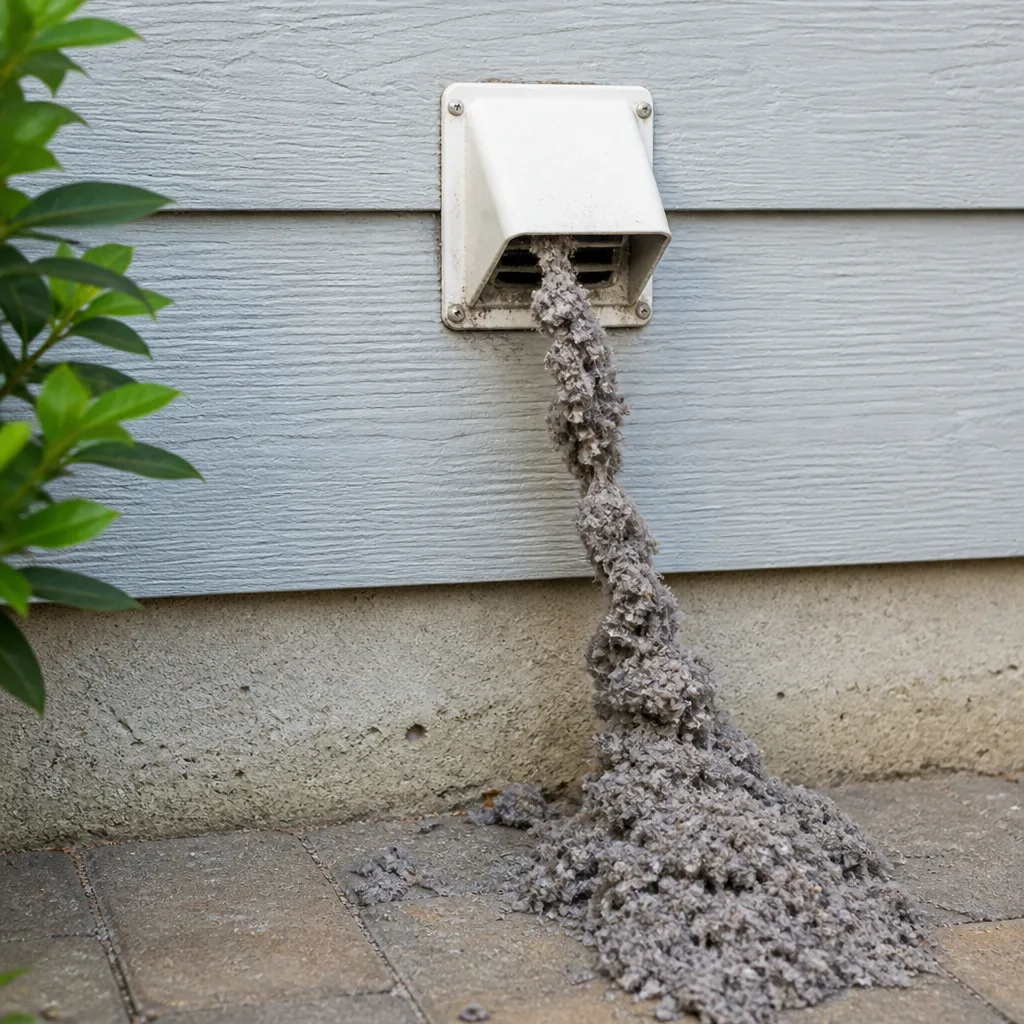 Dryer vent cleaning
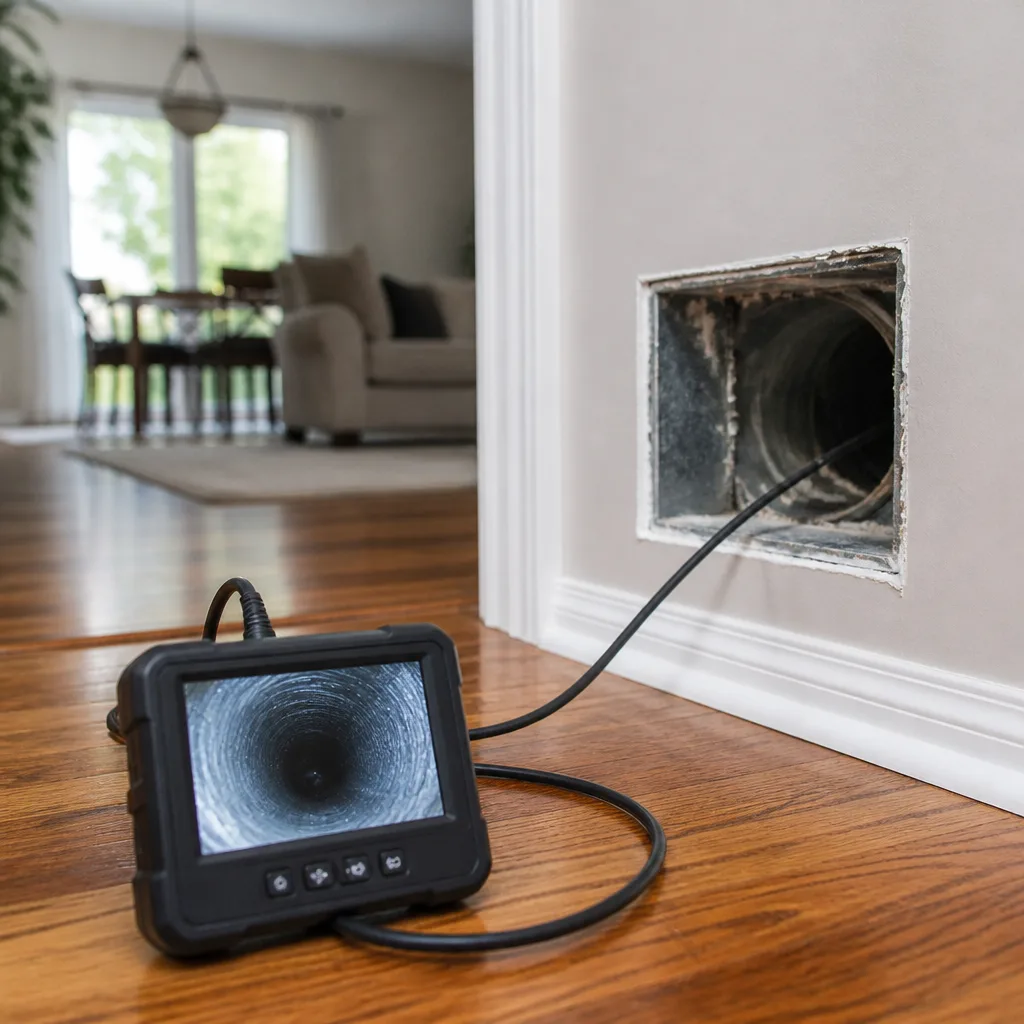 Camera inspection
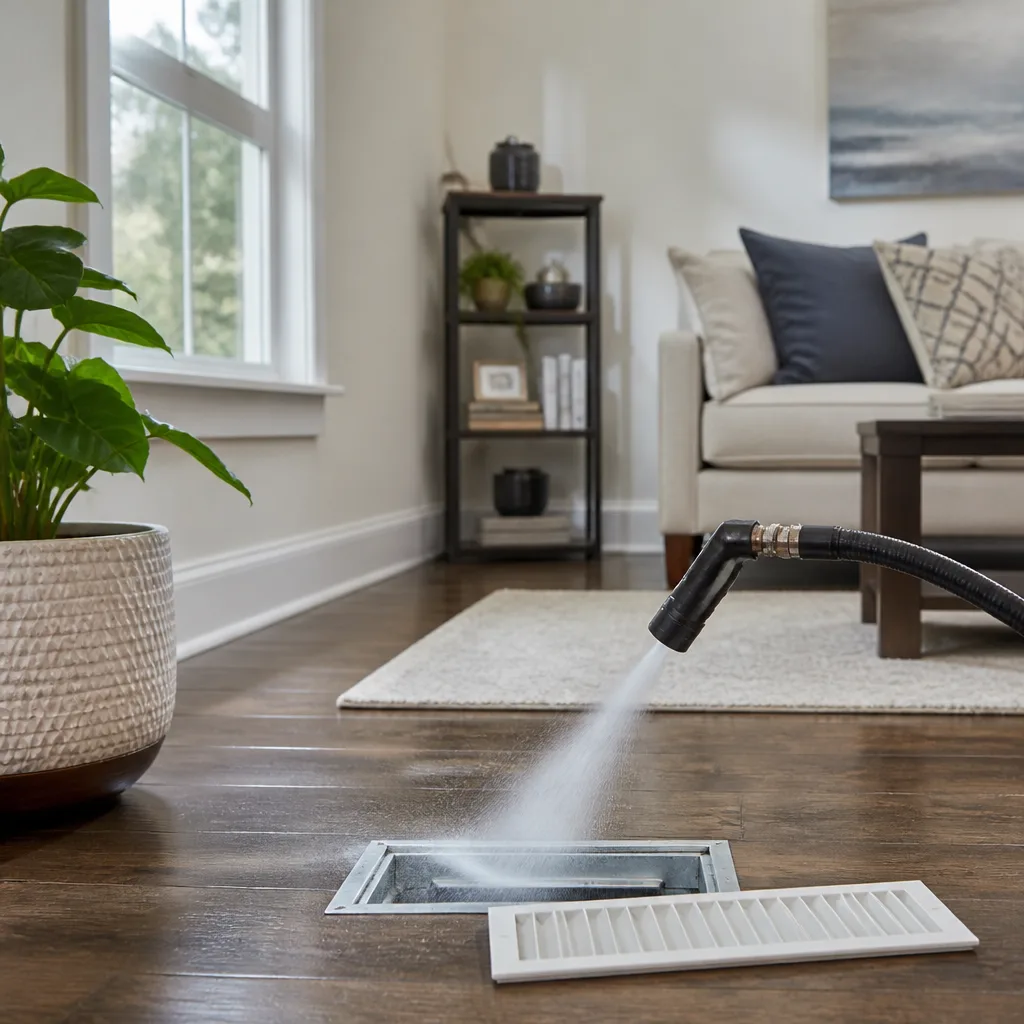 Sanitizing & deodorizing
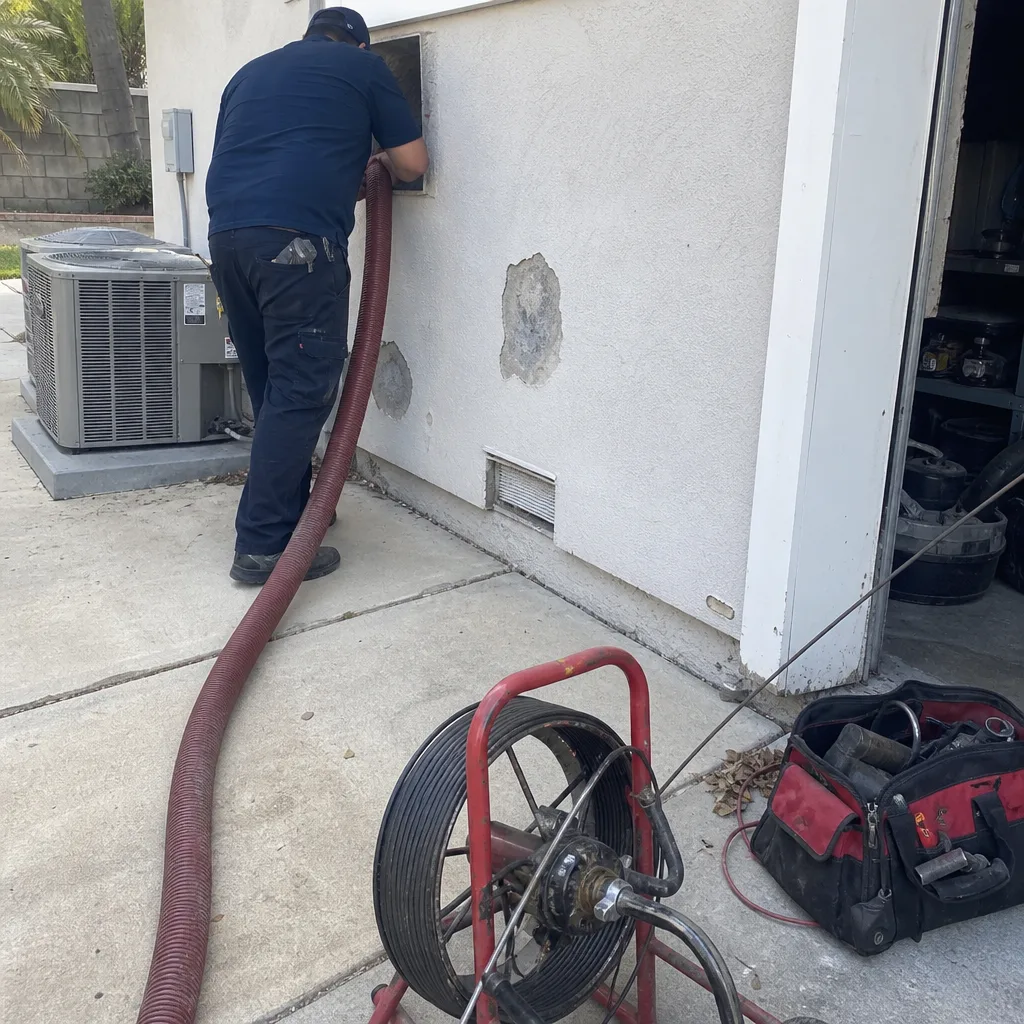
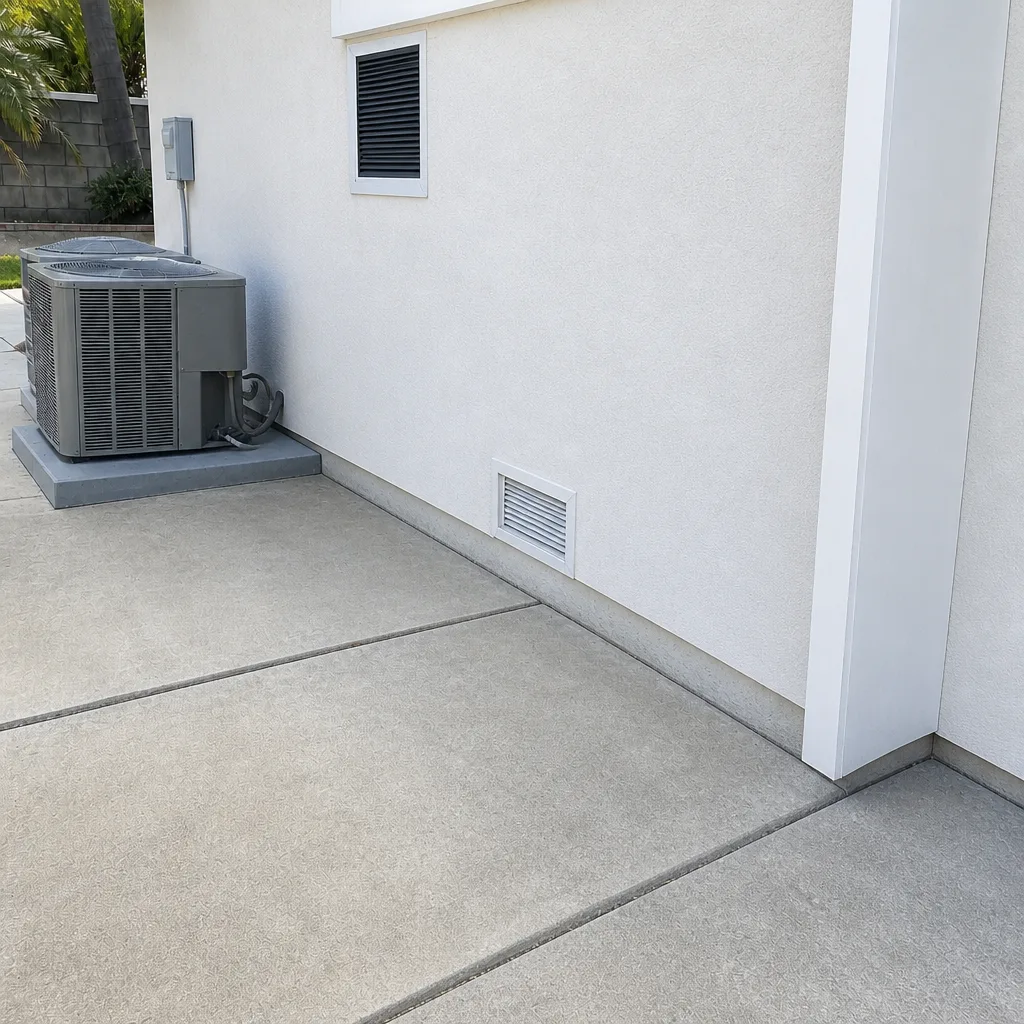
Whole-system duct and dryer vent check with before-and-after photos - you see exactly what came out of your vents
That "$99 whole-house special" is a bait ad - the real number appears once they are in your hallway, or the "clean" is a shop-vac at the register. We photograph the inside of your ducts before and after instead.
Air Duct Cleaning Maintenance Checklist for San Clemente Homeowners
Most homeowners think of duct maintenance as a filter-changing chore. The filter is the least interesting part. The filter you pulled out three months ago is a debris sample, and the pattern on that media – the color, the distribution, what’s stuck to the upstream face versus the downstream side – tells you what’s building up inside the system long before you smell anything or notice a symptom. Read that pattern correctly and you can predict whether you’re on schedule or falling behind. Read it wrong, or don’t read it at all, and the first warning you get is a musty smell in a bedroom or a power bill that stopped making sense. This guide walks through a technician-style observation routine you can run yourself in San Clemente, tied to the seasonal pressure points that actually degrade duct integrity here: marine layer humidity, Santa Ana wind events, and wildfire smoke windows.
Quick Answer
A practical air duct maintenance checklist for San Clemente means four things: inspect registers and return grilles monthly for debris signatures, change filters on a schedule that matches your home’s actual dust load rather than a calendar guess, log observations across seasons so you can see patterns, and schedule professional cleaning based on what those logs show – not on a fixed “every three to five years” rule that ignores how your particular house breathes. Homes near the marine layer and homes on the windy ridge streets above town need different intervals, and a checklist that doesn’t account for that is just a reminder to buy filters.
Styles & brands we work with
- Whole-home duct cleaning
- Dryer vent cleaning
- Camera inspection
- Sanitizing & deodorizing
Table of Contents
- Why a San Clemente Duct Checklist Beats a Reminder Calendar
- The Month-by-Month Observation Schedule
- Reading Debris Signatures at Registers and Returns
- Filter Selection for Coastal Humidity and Older Duct Systems
- Logging Observations to Build Your Own Service Interval
- When a Flashlight Isn’t Enough: Flagging Pro-Scope Situations
- Duct Repair and Sealing: The Checklist Item Everyone Skips
- Common Mistakes to Avoid
- When to Call a Professional
- Frequently Asked Questions
Why a San Clemente Duct Checklist Beats a Reminder Calendar
Duct contamination in San Clemente doesn’t build on a calendar. It builds on events. The marine layer that sits over the city through late spring and early summer pushes indoor relative humidity up in a way that inland Orange County homes don’t see, and that moisture settles in cool return ducts and on the back side of registers where air moves slowest. Then the Santa Ana winds arrive in fall, dry and particulate-heavy, pushing fine dust through every gap in your building envelope and into the return side. Wildfire smoke windows are their own category entirely – a week of orange sky can load more particulate into a system than three ordinary months.
A checklist tied to events catches these. A checklist tied to “every three months, change filter” catches none of them, because it fires on the wrong dates.
The technician-style logic here is simple: you observe forensically at fixed intervals, you record what you saw, and you let the record tell you when to act. That’s how our technicians approach a full-system clean with a Rotobrush or Nikro system – they inspect first, then clean to what they found, not to a stopwatch. Homeowners can run a smaller version of the same logic. What follows isn’t a cleaning procedure; it’s an observation procedure. You’re gathering evidence, not doing the deep clean yourself.
One more reason the calendar approach fails: two houses on the same street in San Clemente can have wildly different duct loads. A 1970s tract home with original flex duct in a crawlspace behaves nothing like a newer build with sealed rigid trunk lines and a tight envelope. Same wind, same marine layer, completely different interior result. The checklist has to be yours, measured against your own baseline.
The Month-by-Month Observation Schedule
This is the schedule our technicians recommend homeowners run between professional visits. It’s tied to what actually happens in San Clemente seasonally, not to a generic four-season template borrowed from a colder climate. Adjust the exact months to what you notice in your own home, but keep the structure.
- Late winter (February – March): baseline reset. After winter heating season, do a full register sweep. Photograph every supply and return grille. Note filter condition and mark the date. This is your reference point for the year.
- Marine layer onset (April – June): the humidity watch. As the coastal layer settles in, check for condensation on cool duct runs and cold spots at registers. Sniff returns for mustiness. Wipe a white cloth across a return grille face – note any dampness or dark staining on the cloth.
- Summer (July – August): filtration check. Peak cooling run hours. Filter loading speeds up because the system runs longer. Pull the filter mid-cycle and look at it against your baseline photo.
- Santa Ana season (September – November): the dust event. Winds push fine particulate hard for days at a stretch. After a significant wind event, inspect return grilles more often. Expect gray dust to appear faster than your baseline suggests.
- Wildfire smoke windows (any time): the acute check. When skies go orange or smoke drifts in, cut system run time if you can, close windows tightly, and inspect filter and return grilles as soon as air quality clears.
- Late fall (November – December): the annual review. Compile the year’s log. Compare photos. Decide whether a professional clean is due based on trends, not the calendar alone.
The point of spacing the checks this way is that each one lands just before or just after the seasonal event most likely to change your system’s condition. You’re sampling at the right moments. In San Clemente, that matters more than checking often, because a check in the calm between events tells you very little.
Reading Debris Signatures at Registers and Returns
This is the part most checklists skip entirely, and it’s the most useful thing you can learn. The debris at a register or return isn’t generic “dirt” – different debris patterns point to different underlying conditions. Learn to tell them apart and you’ll know what kind of conversation to have with a professional. Here’s what each signature typically means, from our experience on San Clemente systems.
- Gray, fibrous lint. Short, soft fibers, often evenly distributed on the grille face. This is the ordinary load: skin cells, fabric fibers, pet hair, dust that made it through a filter. Fine on its own. A sudden increase in gray lint with no seasonal explanation often means the filter is loading faster than your schedule assumes, or it isn’t seating properly and air is bypassing it.
- Dark, oily, or sticky particulate. Looks heavy, clings to the grille rather than sitting loose, sometimes with a faint smoky smell. This points toward cooking exhaust, candle soot, tobacco, or smoke intrusion from a wildfire window. It’s a heavier deposit than lint and tends to smear rather than brush off. Worth flagging for a professional inspection rather than treating as ordinary dust.
- White or grayish powder. Chalky, dry, brushes away easily but leaves a residue line. On metal duct components this can be corrosion of galvanized steel or a buildup of fine mineral dust. It’s rarely dangerous on its own but often signals moisture interacting with metal over time – relevant in San Clemente’s humid marine layer months.
- Green, black, or blue-gray staining. Patchy discoloration on a grille face or around a register collar, especially on the cool return side. This is the signature that warrants a careful look, because it suggests prolonged moisture at a surface. Don’t scrub and forget it. Get a professional to assess whether there’s an actual moisture source feeding it.
- Uniform light film versus uneven buildup. A uniform film across all registers suggests a system-wide filter issue. Uneven buildup – heavy at one vent, light at another – often means a duct leak, poor sealing, or a branch run that’s pulling from an unintended source.
Photograph each signature you find. Compare to the same grille three months later. The signature pattern changing is itself information.
Filter Selection for Coastal Humidity and Older Duct Systems
The instinct is to buy the highest MERV rating the shelf offers. That’s usually the wrong call for a San Clemente home, and here’s why: a filter’s MERV rating isn’t just a filtration number, it’s a restriction number. Higher MERV means denser media means more airflow resistance. Older San Clemente duct systems – especially the tract-home systems built decades ago with narrower branch runs and less capable blowers – often can’t move enough air through a high-restriction filter to keep the system running efficiently. The result is a filter that catches fine particles but starves the system of airflow, driving up run time and strain.
The coastal factor compounds it. In San Clemente’s marine layer months, indoor humidity rises and a filter’s media can hold moisture. A dense, high-restriction filter holds more moisture for longer, and a damp filter is a better environment for microbial growth than a dry one. So the “best” filter in a catalog isn’t the best filter in your house.
Here’s a practical selection approach:
- Know your system’s design airflow. This is written on the air handler nameplate or in the equipment literature. It’s the number your filter choice has to respect. If you don’t know it, ask your HVAC tech.
- Balance filtration against restriction. For most older residential systems, a MERV 8 to MERV 11 pleated filter is a sound working range. Going higher is reasonable only if the equipment is rated for it and the ductwork is properly sized.
- Check the fit, not just the rating. A filter that’s undersized for the slot lets air bypass around the edges, and a poorly seated MERV 13 filter can perform worse than a well-seated MERV 8. Look for the filter to seat snugly with no visible gaps at the frame.
- Watch for media loading time, not just color. Time how many weeks between changes at your baseline. If a filter loads in half the expected time, you’re either over-filtering for your airflow or the return side is pulling in more particulate than it should – both worth investigating.
- Upgrade filtration deliberately, not impulsively. If you want to step up filtration or move to a media cabinet system, that’s a decision to make with a professional who can check your duct sizing against the new restriction. We stock and install Honeywell and Aprilaire filtration products when the system supports them, and we don’t push past what the ductwork can handle.
One more note for marine layer season: if a filter feels damp to the touch after a long humid stretch, don’t just swap it – look for the moisture source. A damp filter is a symptom, not the problem.
Logging Observations to Build Your Own Service Interval
The “every three to five years” rule is a starting point, not a plan. Two homes in the same San Clemente neighborhood can be years apart on actual duct condition depending on how they’re used, how they’re sealed, and what the household does. The way to know your home’s real interval is to keep a log. It doesn’t need to be fancy. A notebook or a phone note is enough, kept consistently.
Here’s what to record every time you check:
- Date and season event. Note the date and, more usefully, the season window (marine layer onset, post-Santa Ana, post-smoke event). Seasonal context is what makes the log meaningful.
- Filter condition. Photograph it against the baseline. Note loading color and coverage. Note weeks since last change.
- Register and return observations. Any of the debris signatures from the section above. Which registers show them and which don’t. Uniform or uneven?
- Smells. Musty, oily, smoky, or nothing. Where in the house the smell is strongest.
- Symptoms. Any increased allergy complaints, dust on furniture faster than usual, or a power bill that’s jumped without an obvious weather explanation.
- Small fixes made. Filter change, grille cleaning, register re-taped. Note what you did and whether the observation improved.
After a year, you’ll have a pattern. After two, you’ll have a service interval built on your home specifically. If a year of logs shows a filter loading fast, gray lint rising steadily, and a musty smell each marine layer season, you don’t need to wait for year three to schedule professional cleaning. If a year shows almost nothing on the log beyond ordinary filter changes, you don’t need to clean on a fixed clock either. The log tells you.
This is the same observation-first logic a full-system professional clean follows. When we schedule an air duct cleaning visit for a San Clemente homeowner, we ask what their own observations have shown, because it informs which branches of the system need the most attention when the Rotobrush and Nikro equipment comes out.
When a Flashlight Isn’t Enough: Flagging Pro-Scope Situations
A flashlight will get you the first twelve inches of a duct run, and that’s useful. It will not show you the condition inside a trunk line, around an air handler, or down a long branch run behind a wall. Knowing where the flashlight’s useful information ends is a maintenance skill in itself. Here are the observations that should prompt a professional scope camera inspection rather than more flashlight work.
- Persistent musty or earthy smell in a room or from a specific register that doesn’t clear after cleaning the grille and changing the filter. The smell source is deeper in the system than your eye can reach.
- Visible staining or discoloration at a register collar or on a grille face that recurs after cleaning. Staining at a surface often traces to a growth condition deeper in the duct run.
- Uneven airflow between rooms that’s worsened over time. A branch that’s consistently weaker points to a partial obstruction, a leak, or a disconnected run – all of which need a scope to diagnose.
- Symptoms that track with the system runtime – allergies or respiratory irritation that flare when the HVAC comes on and ease when it’s off. That pattern suggests the system is delivering something to the room that isn’t just clean air.
- Any pest evidence at a register or return, including droppings or nesting material. This is a professional-decontamination situation, and it goes well beyond routine cleaning. Abatement Technologies equipment exists for exactly this kind of elevated contamination scenario, and it’s the right tool for the job.
- Recent water intrusion anywhere near ductwork – a roof leak, a bathroom overflow, a crawlspace dampness issue. Ductwork that stayed wet has a different cleaning requirement than ductwork that stayed dry.
The general rule: if the observation is at a surface you can see and wipe, a flashlight and a cloth are enough. If the observation is a smell, a symptom pattern, an airflow change, or evidence of growth, that’s a scope-camera job. Doing more flashlight work in that case just delays the answer.
Duct Repair and Sealing: The Checklist Item Everyone Skips
Cleaning without sealing is a temporary fix. It’s the mistake we see most often: a homeowner schedules a thorough clean, the ducts come out spotless, and eighteen months later the system is pulling particulate-heavy air straight back in through unsealed joints and old flex duct disconnected at a collar. Clean air starts at the source, and the source includes the integrity of the duct system itself.
Duct sealing belongs on your maintenance checklist for a specific reason: leaks don’t just let contamination in, they waste conditioned air. In San Clemente, that shows up two ways. First, a leak on the return side pulls air from a crawlspace, an attic, or a wall cavity rather than from the conditioned house – and that source air is loaded with dust and whatever’s growing in that cavity. Second, a leak on the supply side pushes cooled or heated air into an unconditioned space where it does nothing for you, and the blower works harder to compensate. Rising energy bills and worsening dust load are often the same root cause.
Here’s what to check yourself between professional visits:
- Loose tape and mastic at visible joints. Foil tape that’s peeling or mastic that’s cracked is a leak waiting to happen.
- Disconnected or sagging flex duct visible in an attic or crawlspace access. Flex duct that’s pulled off a collar at one end is a direct pathway for unfiltered air.
- Kinks in flex duct runs – a sharp bend restricts airflow as effectively as a partial blockage, and it stresses the duct material over time.
- Dust trails at joints or around a collar. Air leaking out (or in) at a joint often leaves a dust signature around it.
Small tape and mastic issues can be addressed by a homeowner. Anything involving disconnected runs, kinked flex duct behind a wall, or a leak pattern that isn’t obvious should be handled by a professional – because sealing done wrong just shifts the leak somewhere else. Duct repair and sealing is one of five services San Clemente Air Duct Cleaning Pros handles alongside cleaning, so a problem found during an inspection can be corrected in the same visit rather than scheduled as a separate job. You can learn more about our broader work on the San Clemente Air Duct Cleaning Pros home page.
See the difference
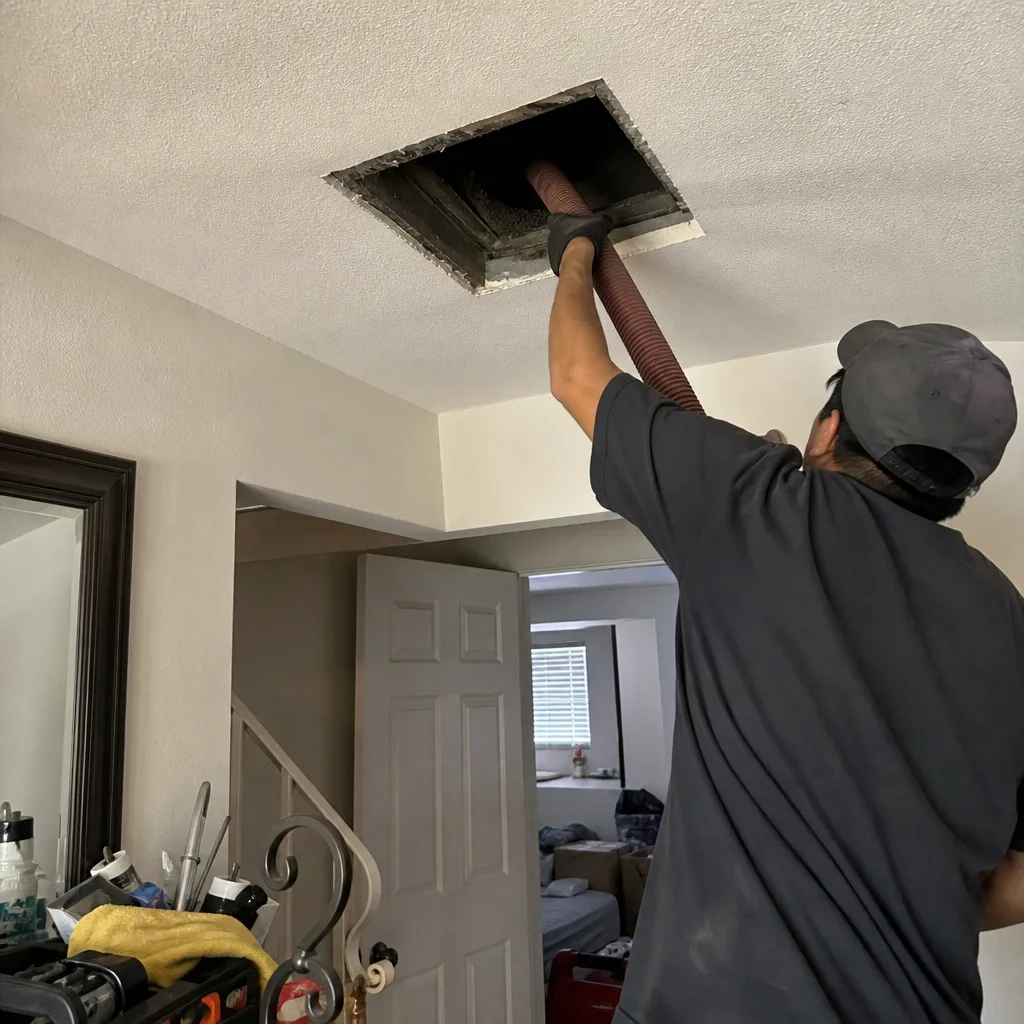 Before
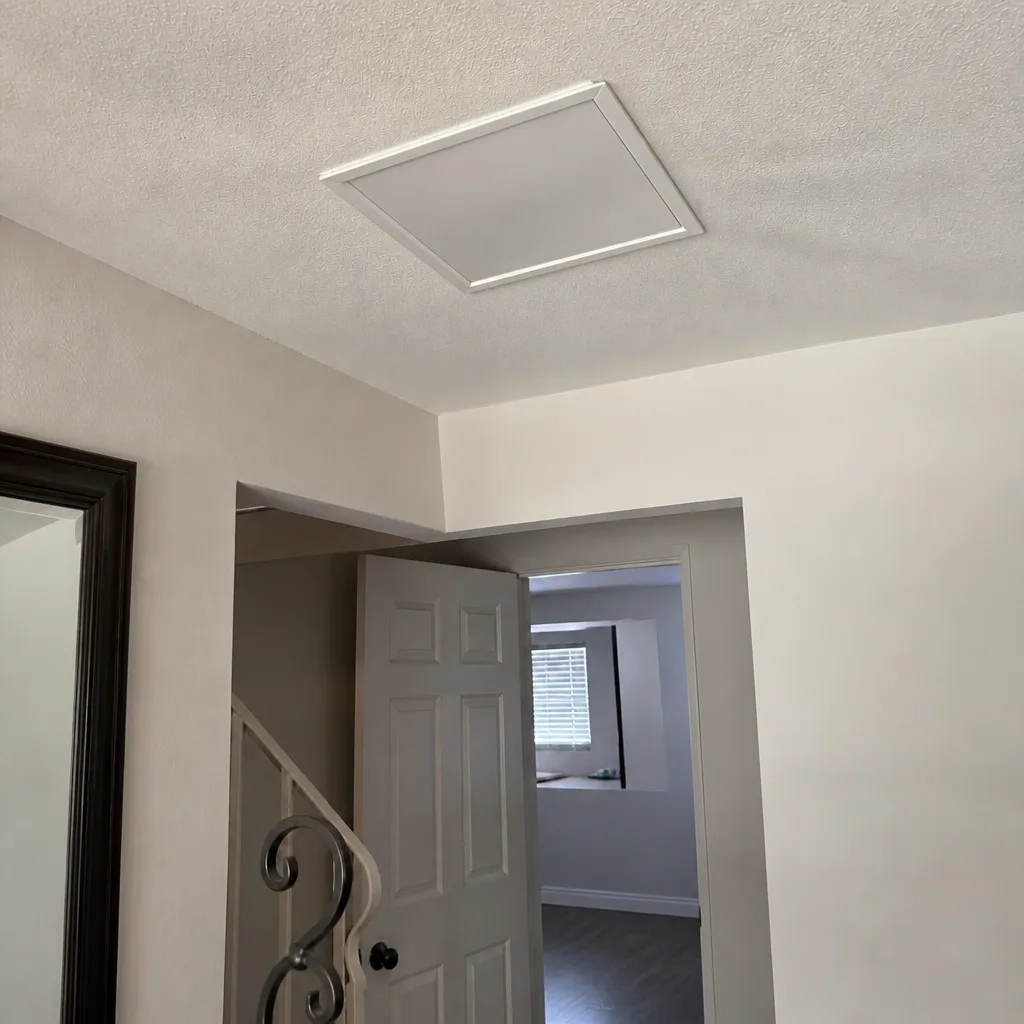 After
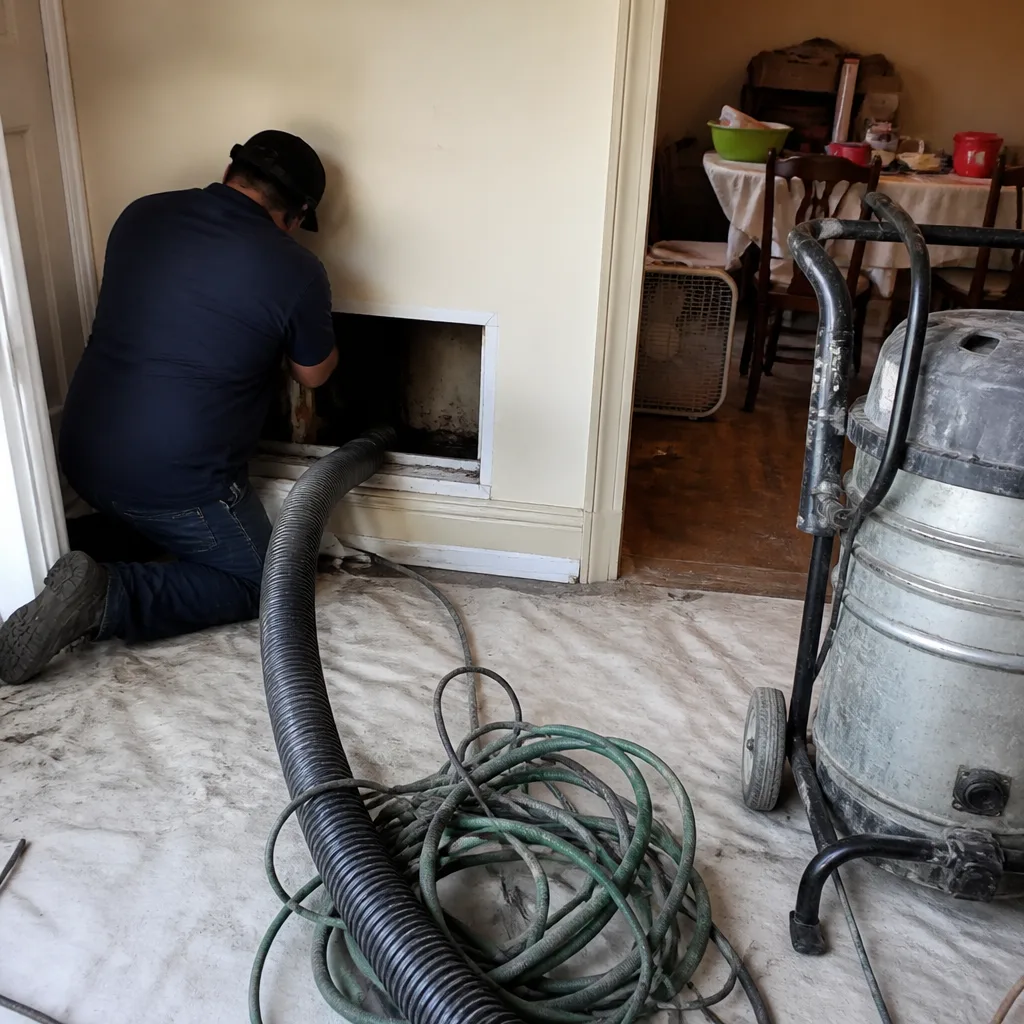 Before
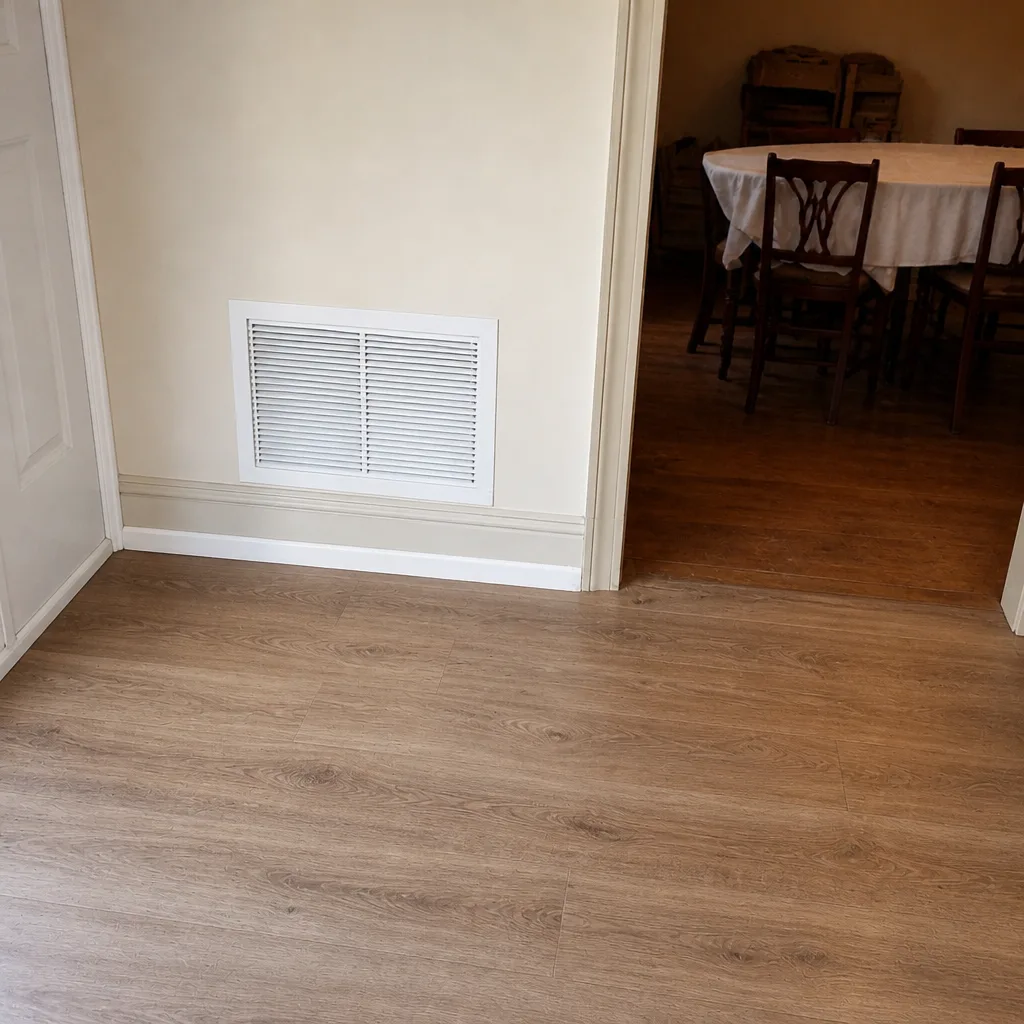 After
 Before
 After
Air Quality and Sanitizing: The Layer Above Cleaning
Cleaning removes what’s there. Sanitizing addresses what was there. In a maintenance checklist, these two belong on different lines. A mechanical clean with Rotobrush or Nikro equipment pulls the accumulated debris out of the system, and that’s the foundation. A sanitizing treatment – typically applied after cleaning – treats the duct surfaces so that the conditions that supported growth are knocked back. We use Guardsman-grade protective treatments as part of the sanitizing service because surface condition matters after a clean, not just the cleanliness of the air the system delivers.
Sanitizing isn’t a routine item on the annual checklist. It’s a response to a specific observation – visible staining, a persistent smell, elevated contamination found during an inspection – rather than something to repeat on a schedule. If your checklist log shows a pattern of mustiness that returns each marine layer season, sanitizing alongside a clean is a reasonable conversation to have. If your log is clean, it isn’t needed. That’s the discipline a checklist is supposed to enforce.
The filtration side works with the sanitizing side. If we’re already out for a HVAC cleaning and the system supports a filtration upgrade, it makes sense to install a Honeywell or Aprilaire filter cabinet in the same visit rather than scheduling it separately. One visit, full system – cleaning, sealing, filtration, and sanitizing considered together – is how the work holds up between maintenance cycles. It’s also why a dryer vent check belongs on the same visit: the dryer vent cleaning service catches lint buildup that a homeowner can’t see from the outside, and it’s a completely separate air pathway in the house that still affects indoor air quality.
Common Mistakes to Avoid
- Buying the highest MERV filter the shelf has. It’s a common instinct in San Clemente’s humid months, and it often over-restricts older duct systems. Match filtration to what your equipment and duct sizing can handle, or you’ll trade dust for airflow problems.
- Changing the filter on a fixed calendar instead of by observation. A marine layer month and a Santa Ana wind week load the filter at completely different rates. If your filter schedule never changes, it’s not tracking anything real.
- Skipping the log. Without records, every cleaning decision becomes a guess, and you end up cleaning on a generic three-to-five-year rule rather than your home’s actual interval. The log is the whole point.
- Wiping a grille and considering it inspected. The grille face is the shallow end. Smells, symptom patterns, and airflow changes are the observations that matter, and they need a scope, not a cloth.
- Scheduling cleaning without addressing leaks. A thorough clean followed by an unsealed duct system is a short-lived result in San Clemente’s wind and humidity seasons. Ask whether sealing is part of the plan.
- Ignoring a recurring musty smell during marine layer season. “It’s just the humidity” can mask a moisture condition inside the duct system that’s worth a professional look. The pattern in the log will tell you whether it’s seasonal or something more.
- Assuming a routine clean covers a mold-adjacent situation. If the observation suggests growth or heavy contamination, it needs contaminant-capture equipment and a different approach, not a standard vacuum pass.
When to Call a Professional
Some checklist findings are homeowner fixes and some aren’t. The line is usually clear once you’ve run the routine for a few months. Call a professional when you find persistent musty or smoky odors that don’t clear, visible staining at a register that returns after cleaning, an airflow change that worsens over time, symptoms that track with system runtime, pest evidence, recent water intrusion near ductwork, or a log that shows the same problem recurring through two consecutive seasons. Also call if you simply want a full-system inspection because you don’t know the history of the ducts in a home you’ve recently moved into. Our technicians have up to 10 years of experience reading exactly these signatures, and San Clemente Air Duct Cleaning Pros offers free estimates in San Clemente – call (866) 371-4884. We answer 24/7. Fast dispatch from 7am to 7pm, Sunday through Friday.
Frequently Asked Questions
There’s no single number that fits every San Clemente home – most homes fall somewhere between a few years and much longer, and the interval depends on household dust load, duct sealing condition, and how often the system runs through the marine layer and Santa Ana seasons. The reliable way to set your interval is to keep an observation log for a year and let the pattern tell you. If you don’t have a log yet and don’t know your home’s history, a professional inspection gives you a starting point. Call (866) 371-4884 for a free estimate.
Cost depends on system size, number of returns, accessibility, and whether sealing or sanitizing is needed – it’s priced per job, not per vent, and the written estimate sets the final price before any work starts. Be cautious with any quote that starts low and grows once the technician is on site; ask for the whole-system price in writing up front. Call (866) 371-4884 for an exact quote – estimates are free.
Cheaper quotes usually mean less work: a quick surface pass with a shop vacuum or repurposed equipment, no sealing, no sanitizing, and no scope-camera inspection of the deeper runs. A full-system clean with purpose-built equipment – Rotobrush or Nikro, not a repurposed vacuum – includes source removal, an inspection of branches and the air handler, and a plan for addressing leaks. The price difference is the work difference. Call (866) 371-4884 to compare quotes on a whole-system basis rather than a per-vent headline.
Ask for before-and-after photos of your own ducts – not stock photos, not another home’s. A technician-style clean documents what was found, what was removed, and what was sealed or treated, and the photos should show the difference at your specific registers and trunk runs. If a company can’t provide that, that’s the answer. Call (866) 371-4884 for an estimate that includes documented before-and-after.
Not directly – higher MERV filters improve particulate filtration, not humidity control. In fact, a dense, high-restriction filter can hold moisture longer during humid months, which is worth considering for older duct systems. Balance filtration against airflow resistance for your equipment, and address humidity itself through the duct system’s sealing and the home’s ventilation rather than through filter choice. If you’re not sure what your system can handle, call (866) 371-4884 for an assessment – estimates are free.
Yes, in most cases. Remodel work – drywall dust, insulation fibers, sawdust, construction debris – is one of the most common sources of heavy duct loading, and a post-remodel clean is worth scheduling once the dust settles rather than waiting for symptoms. San Clemente homes with older duct systems are especially prone to pulling remodel dust into return branches. Call (866) 371-4884 to schedule an inspection and get an honest recommendation before the first heating or cooling season after the work.
The Bottom Line
Duct maintenance is a structured observation routine, not a filter-changing calendar. Read the debris at your registers. Sample at the right seasonal moments: marine layer onset, post-Santa Ana, post-smoke. Match filter choice to your actual airflow, not the highest MERV number on the shelf. Keep a log, and let a year of records tell you when a professional clean is due instead of the generic three-to-five-year rule. When your observations point deeper than a flashlight can reach – smells, symptom patterns, airflow changes, moisture evidence – that’s the moment to call. Cleaning without sealing doesn’t hold, and sanitizing belongs on the response line, not the routine line. Do the routine here in San Clemente, and the cleaning decisions get easier every year.
If you’ve been running the checklist and the log is pointing toward a professional visit, or you’d rather start with a full-system inspection, San Clemente Air Duct Cleaning Pros handles cleaning, dryer vent, HVAC, repair and sealing, and sanitizing as one coordinated service. Call (866) 371-4884 for a free estimate. We answer 24/7. Fast dispatch from 7am to 7pm, Sunday through Friday.
Written by the team at San Clemente Air Duct Cleaning Pros.